
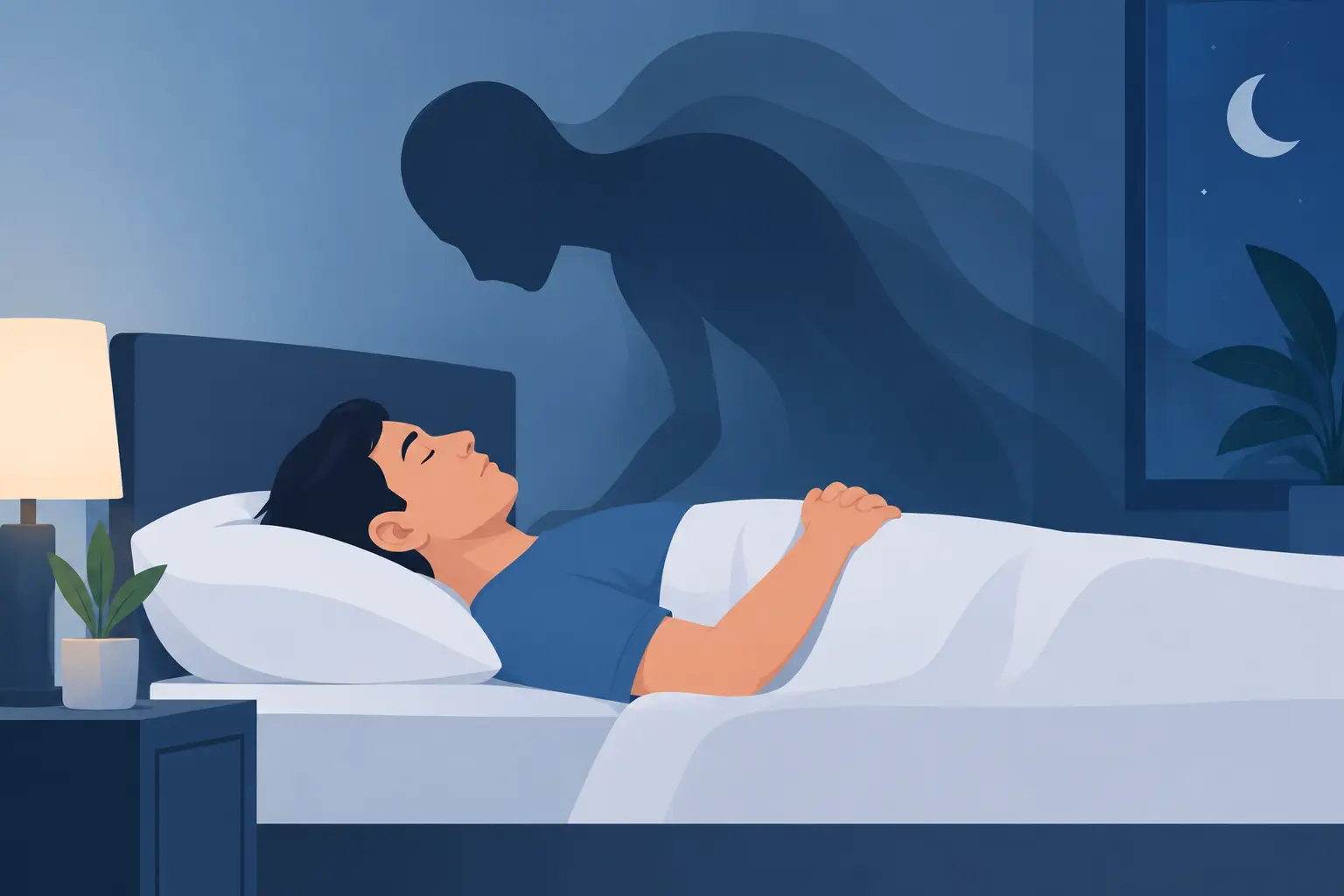
Waking up unable to move can make you question every part of your routine, including how you fell asleep. So, does sleeping on back matter when it comes to sleep paralysis? For some people, it can. Back sleeping is commonly reported before episodes and may make them more likely, but it is not a guarantee, a diagnosis, or something you have done wrong.
Sleep paralysis can feel intensely personal, especially when an episode happens in a familiar place like your own bed. Understanding the possible role of sleep position can offer a useful place to start, without turning bedtime into another thing to fear.
Why sleeping on your back may affect sleep paralysis
Sleep paralysis happens when your mind becomes aware while your body is still temporarily in the muscle-relaxed state of REM sleep. REM is the stage when vivid dreaming is most common. That brief mismatch can leave you conscious but unable to move or speak for a few seconds to several minutes.
Researchers have found an association between sleeping on your back, also called the supine position, and more frequent sleep paralysis in some people. There is not one settled explanation for everyone. Back sleeping may make sleep lighter or more interrupted for certain people, particularly if they snore, have breathing disruptions, or wake more often during the night. Those transitions in and out of sleep can create more opportunities for REM and wakefulness to overlap.
Dream-related sensations may also feel more vivid in this position. During an episode, pressure on the chest, a sense that someone is nearby, or difficulty taking a satisfying breath can be frightening. When you are lying face-up and cannot move, those sensations may be easier to notice and harder to dismiss. The experience is real and distressing, even though it does not mean you are in danger.
Still, association is not the same as cause. Plenty of people sleep on their backs and never experience sleep paralysis. Others have episodes while sleeping on their side or stomach. Your pattern matters more than a general rule.
Does sleeping on back matter for everyone?
Not necessarily. If you have only had one episode, changing your sleep position may not make a noticeable difference. Sleep paralysis can be more likely during periods of sleep loss, an irregular schedule, stress, jet lag, or disrupted sleep. Position may be one piece of a larger picture rather than the main driver.
It can also be hard to know your position with certainty. Most people shift throughout the night, and an episode may occur during a brief nap or early-morning stretch of REM sleep rather than in the position they used at bedtime. That is why it helps to approach this with curiosity instead of trying to find one perfect explanation.
You do not need to force yourself into a position that feels uncomfortable. Good sleep is not about getting every condition exactly right. It is about noticing what supports steadier, more restorative rest for you.
How to see whether position is part of your pattern
A simple record can turn a vague, frightening experience into information you can use. After an episode, or the next morning, note whether you remember falling asleep or waking on your back, side, or stomach. Then add a few details: when you went to bed, when you woke up, whether you napped, how rested you felt, and whether stress was running high.
Over a few weeks, you may see that episodes cluster after short nights, changing work shifts, late weekend sleep-ins, or nights when you wake repeatedly. You may also notice that they happen mostly when you are on your back. No single entry proves anything, but repeated patterns can guide a gentle experiment.
An episode tracker can be especially helpful because memory gets fuzzy after a scare. It gives you a private place to capture the timing, sensations, and context without having to explain the experience perfectly to anyone else. At Unfreeze, this kind of reflection is meant to replace self-blame with clearer understanding.
Try a low-pressure side-sleeping experiment
If back sleeping appears often in your notes, try prioritizing side sleeping for two to three weeks. Use a pillow behind your back for support, hold a pillow in front of you, or place a pillow between your knees if that is comfortable. The goal is not to restrain yourself or stay perfectly still. It is simply to make a side position easier to return to.
Keep the rest of your routine as consistent as possible during the experiment. If you change your position, bedtime, caffeine habits, and stress routine all at once, it becomes difficult to tell what helped. Notice whether episodes, near-episodes, or anxious awakenings change over time.
If side sleeping does not change anything, that is useful information too. It may mean that schedule disruption, stress, or another factor deserves more attention than position.
Support your sleep without making it a test
Trying to prevent sleep paralysis can sometimes create pressure around sleep itself. You may start checking the clock, worrying about lying the wrong way, or feeling alert for signs that an episode is coming. That vigilance can make rest harder. A calmer approach is usually more sustainable.
Start with a reasonably consistent wake-up time, including on days off when possible. A regular wake time helps your sleep rhythm settle, even if your bedtime varies a little. Give yourself enough opportunity for sleep, especially after a few short nights. Sleep deprivation is a common trigger for many people.
It can also help to create a small transition before bed. Dim the lights, put your phone aside for a few minutes, stretch, listen to something familiar, or write down what is on your mind. This is not about building a perfect nighttime routine. It is a signal to your nervous system that it can begin to settle.
If you wake after an episode, focus on orienting yourself before trying to solve it. Remind yourself where you are. Notice the room, the bedding, and the fact that movement has returned. Take slow, comfortable breaths rather than forcing deep ones. Some people find it grounding to move a finger or toe first, but you do not have to perform any technique correctly for the episode to end. Sleep paralysis passes.
When back sleeping could point to another sleep concern
For some people, back sleeping worsens snoring or obstructive sleep apnea, a condition involving repeated breathing interruptions during sleep. That does not mean sleep paralysis automatically signals sleep apnea. But if you regularly snore loudly, gasp or choke in sleep, wake with headaches, feel very sleepy during the day, or are told you stop breathing at night, it is worth discussing with a healthcare professional.
Consider seeking professional support as well if episodes are frequent, are causing significant fear of sleep, or come with sudden muscle weakness during the day. A clinician or sleep specialist can help look at the wider picture and rule out other sleep-related conditions. Asking for help does not mean your experience is dramatic or unusual. It means you deserve support that fits what you are going through.
You are more than your sleep position
Back sleeping may matter for your sleep paralysis, or it may not. The most helpful question is not, “What am I doing wrong?” It is, “What do I notice when I look at my sleep with care?”
Give yourself permission to test a side-sleeping setup if it feels right, keep a few notes, and let patterns emerge gradually. You are not alone in this experience, and you do not have to solve it all in one night. Reclaiming your rest can begin with one quieter, kinder observation at a time.