

Sleep paralysis can feel terrifying – but understanding it is the first step toward feeling safe again. If you’ve ever woken up unable to move, speak, or breathe normally, you may have experienced sleep paralysis. Many people search for what sleep paralysis is, what causes sleep paralysis, or how to prevent sleep paralysis because the experience feels intense and confusing.
The good news? Sleep paralysis is common, temporary, and not physically harmful. With the right knowledge and practical strategies, you can reduce episodes and regain sleep confidence. If you’re looking for structured support, explore science-backed sleep health solutions or learn more about managing sleep paralysis through tracking and education tools designed specifically for this condition.
What Is Sleep Paralysis? Understanding the Meaning and Science
So, what is sleep paralysis exactly?
Sleep paralysis happens when your brain wakes up before your body fully exits REM (Rapid Eye Movement) sleep. During REM sleep, your muscles are temporarily relaxed to prevent you from acting out dreams. If awareness returns before muscle control does, you experience temporary immobility – this is the sleep paralysis meaning in simple terms.
You may be awake but unable to move, speak, or sometimes breathe comfortably for a few seconds or minutes.
This condition sits between sleep and wakefulness – a mixed state of consciousness. Understanding this neurological overlap is important because it helps remove fear and replace it with clarity.
Why It Feels So Real
During REM sleep, the brain is highly active. Dream imagery and emotional processing are still engaged. That’s why sleep paralysis symptoms may include vivid sensations, pressure feelings, or strong fear responses.
Knowing this is critical because it reframes the experience as a sleep-cycle event – not something supernatural or dangerous.

Sleep Paralysis Symptoms: What You Might Experience
Recognizing symptoms helps you stay calm during episodes. When you understand what is happening, panic decreases.
Common Sleep Paralysis Symptoms
The most frequent sleep paralysis symptoms include:
- Inability to move or speak
- Chest pressure or difficulty breathing
- Intense fear or panic
- Sensation of presence in the room
- Visual or auditory hallucinations
- Feeling watched or touched
These symptoms occur because the body is still in REM atonia while the brain regains awareness.
Why Recognizing Symptoms Matters
Recognizing sleep paralysis symptoms helps you stay calm during episodes. When you understand that the sensation is temporary and linked to REM sleep, fear decreases. Lower fear often shortens the episode itself.
If episodes are frequent or distressing, structured sleep paralysis treatment options that include tracking and education can help identify triggers and reduce recurrence.
What Causes Sleep Paralysis? Key Triggers and Risk Factors
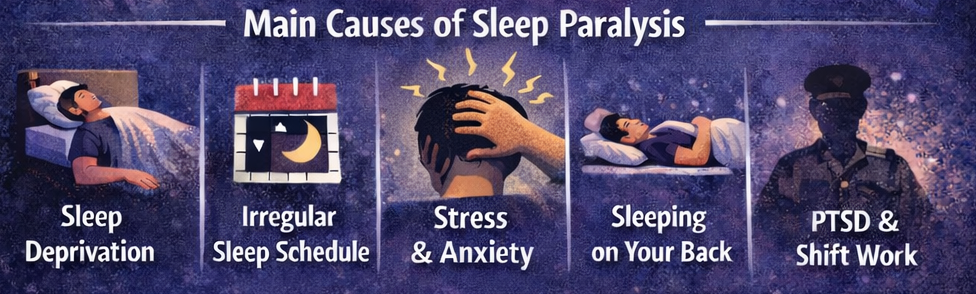
Primary Sleep Paralysis Causes
Research identifies several common sleep paralysis causes:.
- Sleep deprivation
- Irregular sleep schedule
- Stress and anxiety
- Sleeping on your back
- Narcolepsy
- PTSD
- Shift work
These sleep paralysis causes disrupt normal REM timing. When REM sleep is fragmented or delayed, the brain-body coordination becomes misaligned.
The Role of Stress and Anxiety
Stress is one of the strongest contributors. When stress levels rise, sleep becomes lighter and more fragmented. REM cycles may become unstable, increasing the likelihood of episodes.
Managing stress isn’t just helpful – it’s one of the most effective ways to prevent sleep paralysis.
Sleep Position and REM Disruption
Studies suggest sleeping on your back (supine position) may increase episodes for some individuals. While not universal, adjusting sleep position can reduce frequency for certain people.
Understanding what causes sleep paralysis allows you to make targeted changes rather than guessing.
How to Prevent Sleep Paralysis and Reduce Episodes
Many people search for how to avoid sleep paralysis or how to prevent sleep paralysis long term. While there is no instant cure, evidence-based lifestyle adjustments significantly reduce episodes.
1. Improve Sleep Consistency
Going to bed and waking up at the same time stabilizes REM cycles. Consistency reduces REM interruptions – a core factor in prevention.
2. Reduce Sleep Deprivation
Aim for 7-9 hours of sleep (CDC guideline). Sleep loss is one of the strongest triggers.
External reference:
Centers for Disease Control and Prevention – Sleep Health
3. Manage Stress Before Bed
Relaxation techniques like:
- Slow breathing
- Progressive muscle relaxation
- Journaling
- Limiting late-night screen exposure
Stress reduction directly supports REM stability.
4. Adjust Sleep Position
If episodes happen mostly while lying on your back, try side sleeping.
5. Track Patterns Over Time
Tracking episodes helps identify personal triggers. When you understand timing, fear levels, and lifestyle patterns, you gain control. This structured awareness is one of the most effective ways to prevent recurrence.
According to research published by the National Library of Medicine, sleep paralysis is more common among individuals with irregular sleep patterns and psychological stress
How to Stay Calm During an Episode
Even with prevention strategies, occasional episodes may occur. Knowing how to respond reduces intensity.
- Focus on Breathing
Slow nasal breathing helps regulate the nervous system
- Remind Yourself It’s Temporary
Repeat internally: “This is sleep paralysis. It will pass.” This reduces panic and often shortens duration.
- Shift Focus to Small Movements
Instead of trying to move your whole body, focus on small muscle movement (like a finger or toe). Staying calm is powerful. Fear fuels intensity; calm reduces it.
Final Thoughts
Sleep paralysis can feel overwhelming – but knowledge reduces fear. Now that you understand what causes sleep paralysis, recognize common sleep paralysis symptoms, and know practical ways how to prevent sleep paralysis, you can take meaningful steps toward better sleep.
Improving sleep consistency, managing stress, and tracking patterns are powerful strategies. With structured support and science-backed guidance, episodes often decrease in frequency and intensity.
If you’re ready to feel safer and more confident at night, explore how Unfreeze provides personalized tools, tracking features, and supportive resources designed specifically for managing sleep paralysis.
FAQ
- Is sleep paralysis dangerous?
No. Although frightening, it is not physically harmful.
- How long does sleep paralysis last?
Usually, seconds to two minutes.
- Can sleep paralysis be cured permanently?
There is no guaranteed cure, but many people significantly reduce episodes with sleep consistency and stress management.