
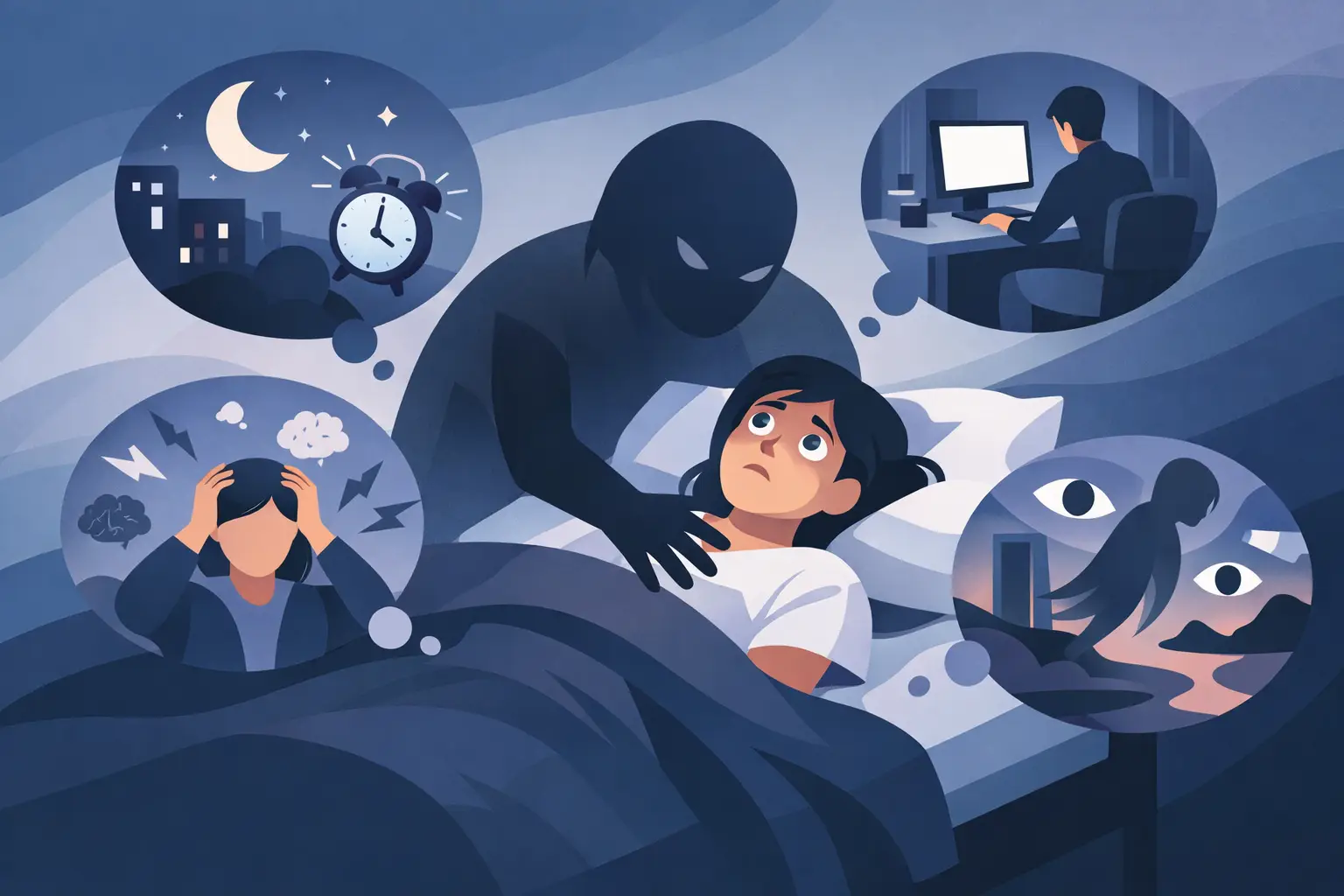
You wake up, realize you cannot move, and your mind races before your body catches up. In that moment, the question feels urgent and deeply personal: what triggers sleep paralysis? For many people, the answer is not one dramatic cause but a pattern – a mix of sleep timing, stress, and nervous system overload that makes episodes more likely.
Sleep paralysis happens when your brain becomes aware while your body is still in a temporary state of muscle paralysis linked to REM sleep. REM is the stage where vivid dreaming is most common, and your body naturally reduces movement so you do not act out dreams. When awareness returns before that paralysis fully lifts, it can feel intense, confusing, and frightening. It can also come with pressure on the chest, a sense of presence, or vivid dreamlike images and sounds.
That experience can feel supernatural when it happens in the dark at 3 a.m. But the triggers are usually very human. They often relate to how your sleep system is being disrupted, strained, or pushed out of rhythm.
What triggers sleep paralysis most often?
The most common triggers are irregular sleep schedules, sleep deprivation, high stress, anxiety, and fragmented sleep. In simple terms, sleep paralysis is more likely when your brain and body are not moving smoothly through sleep stages.
This is why episodes often show up during periods of change. Maybe you are staying up late to finish assignments, working shifts that move around, traveling across time zones, or lying awake because your mind will not settle. The body likes rhythm. When that rhythm gets disrupted, transitions into and out of REM can become less stable.
That does not mean everyone with poor sleep will experience sleep paralysis. It depends on your individual vulnerability. Some people can pull several late nights and never have an episode. Others notice one after a smaller disruption. If you have had sleep paralysis before, your system may simply be more sensitive to the conditions that trigger it.
Sleep loss and irregular schedules
One of the clearest answers to what triggers sleep paralysis is not getting enough sleep. When you are sleep deprived, REM sleep can become more intense and compressed. That can make the boundary between dreaming and waking feel thinner.
Irregular schedules can have a similar effect. Sleeping at very different times from one day to the next, pulling all-nighters, sleeping in far past your usual wake time, or constantly shifting your bedtime can all strain your internal clock. College students, night shift workers, new parents, and people juggling multiple jobs often notice this connection.
The trade-off here is that life is not always routine. You may not be able to create a perfect schedule right away. But even small improvements in consistency can matter. Going to bed and waking up within a similar window most days often helps reduce the sleep instability that can set the stage for an episode.
Why REM sleep matters
Sleep paralysis is closely tied to REM sleep because REM is the stage where muscle paralysis naturally happens. If you wake directly out of REM, or drift into awareness while your body is still in that state, you may experience the classic frozen feeling.
Episodes are especially common when falling asleep or waking up. That is why some people notice them during naps, early morning sleep, or after broken sleep during the night. These are times when REM-related transitions can feel more abrupt.
Stress, anxiety, and nervous system overload
Stress does not just affect your thoughts. It affects your sleep architecture, your heart rate, your muscle tension, and how easily your body settles into deep rest. When stress is high, sleep often becomes lighter, more fragmented, and less predictable. That can increase the chances of waking during a REM-related state.
Anxiety can add another layer. If your mind stays alert even while your body is exhausted, your sleep may feel restless rather than restorative. Some people notice more episodes during emotionally intense periods like exams, grief, conflict, burnout, or health anxiety. Others find that fear of sleep paralysis itself becomes part of the cycle, making bedtime feel tense and watchful.
This does not mean the episodes are “all in your head.” It means your nervous system is part of the picture. A stressed system is more reactive, and reactive systems tend to sleep less smoothly.
Sleeping on your back and other physical patterns
Many people report more episodes when sleeping on their back. Researchers have noticed this pattern too, although it is not a rule for everyone. One possible reason is that back sleeping may be linked to lighter sleep, breathing changes, or increased awareness during REM transitions in some people.
This is a good example of why tracking matters. If you only have episodes in one sleep position, that is useful information. If position makes no difference for you, that is useful too. Triggers are common patterns, not guarantees.
Other physical factors can matter as well. Alcohol, certain medications, and disrupted sleep from snoring or breathing issues may increase the likelihood of episodes for some people. Again, it depends. The goal is not to blame yourself for every variable. It is to notice what tends to be happening around your episodes.
Can other sleep conditions trigger sleep paralysis?
Yes, sometimes. Sleep paralysis can happen on its own, but it may also show up alongside other sleep issues like insomnia, narcolepsy, or obstructive sleep apnea. If your sleep is regularly interrupted, highly fragmented, or unusually daytime-sleepy, that can create more opportunities for REM and wakefulness to overlap.
This is one reason not every episode should be treated as a random fluke. If sleep paralysis is frequent, worsening, or paired with other symptoms, the bigger sleep picture matters. You do not need to panic, but you do deserve a clearer understanding of what your body is doing.
What triggers sleep paralysis for you may be a pattern, not a single cause
People often search for one answer because one answer feels easier to control. But sleep paralysis is rarely caused by one thing alone. It is more often a stack of smaller factors that line up at the same time.
For example, an episode might happen after a week of short sleep, a stressful conversation, and falling asleep on the couch at an unusual hour. Another might happen while traveling, after drinking more caffeine than usual, and waking up repeatedly overnight. None of those factors guarantees an episode by itself. Together, they can make one more likely.
This is why reflective tracking can be so helpful. Instead of asking, “What is wrong with me?” you can ask, “What was going on around this episode?” Over time, patterns become easier to spot. That shift alone can reduce fear because the experience starts to feel less random.
How to recognize your own triggers without spiraling
Start simple. Notice when the episode happened, how much sleep you had, whether your schedule had changed, what position you were sleeping in, and how stressed you felt in the previous day or two. You do not need a perfect spreadsheet or a clinical mindset. A few consistent notes can tell you a lot.
Try to track gently, not obsessively. The goal is awareness, not hypervigilance. If paying attention starts to make you more anxious at bedtime, scale it back. Calm observation is more useful than intense monitoring.
If you want a more structured way to do this, condition-specific tools like Unfreeze are designed around the patterns people with sleep paralysis actually care about – timing, stress, sleep disruption, and what the episode felt like afterward. That kind of tracking can help turn a frightening event into something more understandable.
What can lower the chances of an episode?
You cannot always prevent sleep paralysis completely, especially during stressful seasons. But you can lower the odds by protecting the basics. A more regular sleep schedule, enough total sleep, less sleep deprivation, and gentler wind-down habits can make a real difference.
If stress is a major factor for you, nervous system regulation matters too. That might mean quieter evenings, less doom-scrolling before bed, breathing exercises, journaling, or anything else that helps your body feel safe enough to rest. The best strategy is usually the one you can repeat, not the one that sounds most impressive.
And if episodes are frequent, severe, or tied to other symptoms like extreme daytime sleepiness, choking awake, or major insomnia, it may be worth talking with a healthcare professional. Support does not have to be dramatic to be valid.
Sleep paralysis can feel sudden and deeply unsettling, but it usually has roots in recognizable sleep and stress patterns. The more gently you observe those patterns, the less power the mystery tends to hold. You are not overreacting, and you are not alone – and with the right understanding, this experience can start to feel less like a threat and more like a signal your body is asking for steadier rest.