
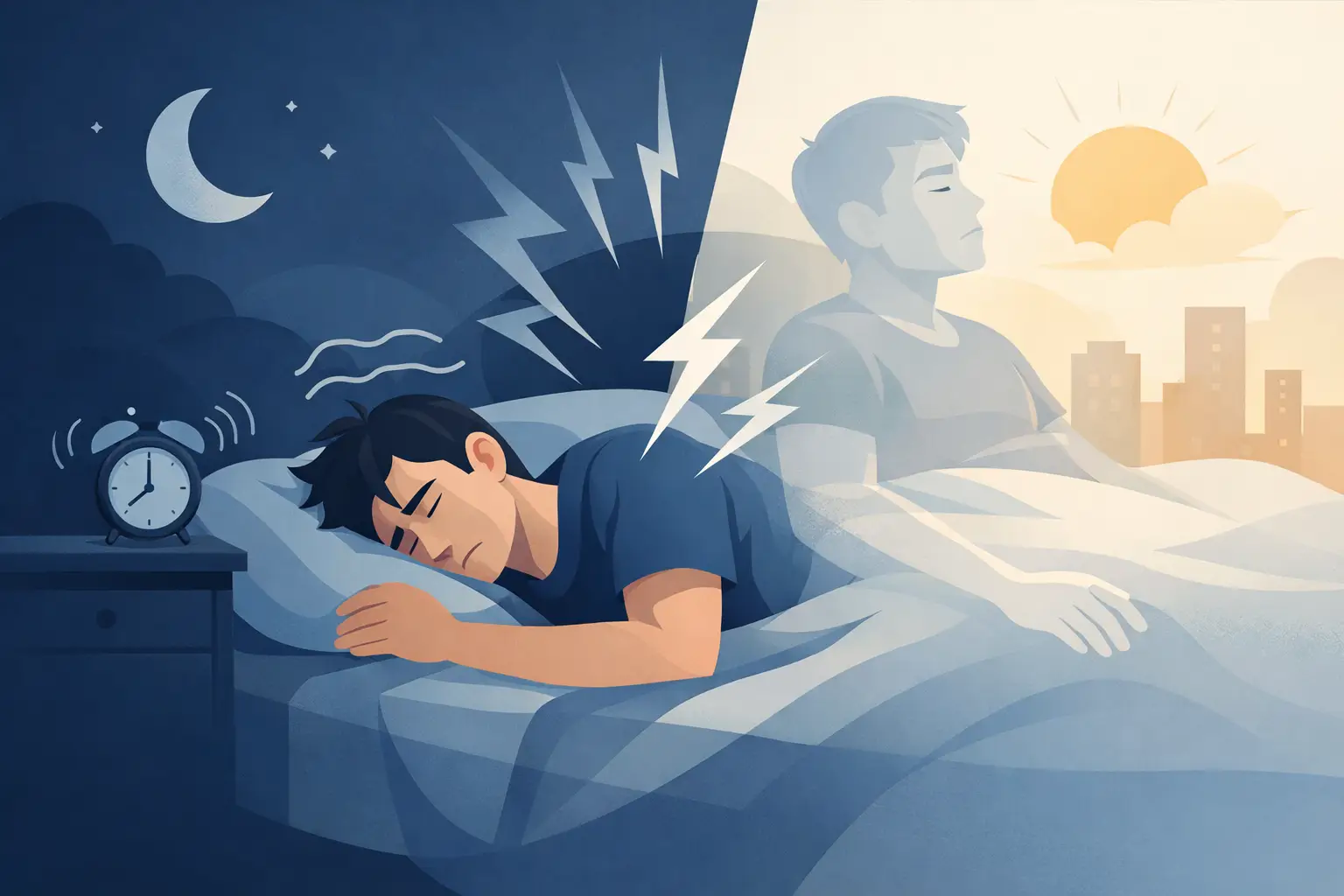
A night of staying up late, sleeping at an unusual hour, or catching up on rest can feel ordinary. But if you wake up unable to move, it makes sense to ask: can poor sleep schedule trigger paralysis? An irregular sleep schedule can make sleep paralysis more likely for some people. It is not a personal failure, and one late night does not guarantee an episode. Still, the way your sleep is timed can affect the conditions in which episodes happen.
Sleep paralysis can be frightening because your mind may feel awake while your body will not respond. Understanding the role of sleep timing can replace some of the mystery with something more manageable: patterns you can notice, gently adjust, and discuss with a health professional if needed.
How a poor sleep schedule can trigger sleep paralysis
Sleep paralysis is thought to happen when features of REM sleep briefly continue as you become aware. REM is the stage when vivid dreams are common. During it, the brain normally reduces most voluntary muscle movement, which helps keep us from acting out dreams. In sleep paralysis, that muscle stillness lingers for a short time at sleep onset or on waking.
A disrupted schedule can make the transition between sleep stages less predictable. Going to bed and waking at very different times, getting too little sleep, working overnight shifts, traveling across time zones, or sleeping in long stretches after sleep loss can all put extra pressure on your sleep rhythm. For someone already prone to sleep paralysis, that disruption may create more opportunities for waking awareness and REM-related muscle atonia to overlap.
That is why people often notice episodes during periods of finals, deadline-heavy workweeks, new-parent sleep, travel, or a run of late nights. The schedule itself is not always the only cause. Stress, anxiety, sleeping on your back, certain medications, alcohol or other substances, and some sleep conditions may also play a role. Often, it is the combination that matters.
Why catching up on sleep can sometimes feel different
After several short nights, sleeping late on the weekend may be necessary and restorative. You do not need to be afraid of extra rest. But big swings in wake-up time can shift your internal clock, especially if they happen week after week.
Sleep loss can also lead to more intense REM sleep later, sometimes called REM rebound. That may be one reason an episode appears after a period of exhaustion or an unusually long sleep. The useful takeaway is not to force yourself to sleep less. It is to aim for enough sleep on a steadier rhythm whenever life allows.
A consistent schedule does not have to mean a rigid one. Many people cannot keep identical hours every day because of work, school, caregiving, or health. Even narrowing the gap between weekday and weekend wake times can be a realistic starting point. Small changes are often easier for your nervous system to tolerate than a dramatic overnight reset.
What “better sleep timing” can look like
If episodes seem connected to irregular sleep, begin with observation rather than pressure. For two or three weeks, note when you go to bed, when you wake, naps, caffeine or alcohol, stress level, and whether an episode occurs. Include what you remember about the episode, such as whether it happened while falling asleep or waking, how long it seemed to last, and your sleep position.
The goal is not to find a perfect explanation for every episode. Sleep paralysis can happen even when you are doing many things “right.” Tracking simply helps you see whether a pattern is present. You may notice that episodes cluster after nights under six hours, after sleeping until noon, or during stressful weeks when your bedtime moves later and later.
If you see a pattern, choose one gentle adjustment. Try keeping your wake time within about an hour on most days, then let bedtime move earlier gradually as you feel sleepy. Getting daylight soon after waking, eating and moving at roughly regular times, and making room for a wind-down routine can support that rhythm. The point is not to earn sleep through perfect habits. It is to give your body clearer timing cues.
Avoid trying to “fix” an episode by staying awake all night afterward. Fear can make that urge feel understandable, but more sleep deprivation may increase vulnerability to another episode. If you are shaken, focus instead on a calming routine and an earlier, manageable return to rest.
During an episode, focus on safety and small signals
Sleep paralysis usually passes on its own within seconds to a few minutes, even though it can feel much longer. Reminding yourself, if you can, that this is a temporary sleep-state mismatch may reduce the panic that makes the experience feel even more intense.
Rather than trying to force your whole body to move, some people find it easier to focus on a tiny action: wiggling a finger or toe, blinking, or taking slow, steady breaths. Others mentally repeat a simple phrase such as, “This will pass. My body is safe.” There is no single technique that works for everyone, and not being able to use one in the moment does not mean you did anything wrong.
Hallucinations, pressure sensations, or a sense that someone is in the room can occur during sleep paralysis. They can feel deeply real, but they are a known part of this half-dreaming state. You deserve support for how upsetting they feel, without being judged or told you are overreacting.
When it is worth getting medical support
Occasional isolated sleep paralysis is common and is often not dangerous. However, it is a good idea to speak with a doctor or sleep specialist if episodes are frequent, worsening, causing major fear around sleep, or leaving you very sleepy during the day. Bring your sleep notes if you have them. They can make the conversation clearer.
Seek prompt medical care for new weakness that continues after you are fully awake, paralysis on one side of the body, trouble speaking, chest pain, severe shortness of breath, or other symptoms that do not fit a brief sleep-paralysis episode. Sleep paralysis should resolve once you are awake. Ongoing or unusual symptoms deserve evaluation.
A clinician can also help assess related concerns, such as insomnia, sleep apnea, medication effects, depression or anxiety, or narcolepsy. This does not mean any of those conditions are the reason for your episodes. It means you do not have to sort through persistent symptoms alone.
Make room for compassion, not blame
A poor sleep schedule can be a trigger, but that word should not become a source of shame. Schedules become irregular for real reasons: jobs demand late hours, classes start early, anxiety keeps the mind alert, and life can be unpredictable. The aim is not control at all costs. It is learning what helps your body feel more settled and making changes that fit your actual life.
If you are tracking episodes, look for patterns with curiosity. A tool like Unfreeze can offer a private place to record timing, stress, and what the experience felt like, so you are not relying on memory after a scary night. Over time, even a little clarity can make sleep feel less like something that happens to you.
You are not alone in this experience, and you are not broken because your sleep has been uneven. Tonight, choose one small cue of steadiness – a consistent alarm, a quieter wind-down, or simply permission to rest without fighting the fear. Reclaiming your rest can begin there.