
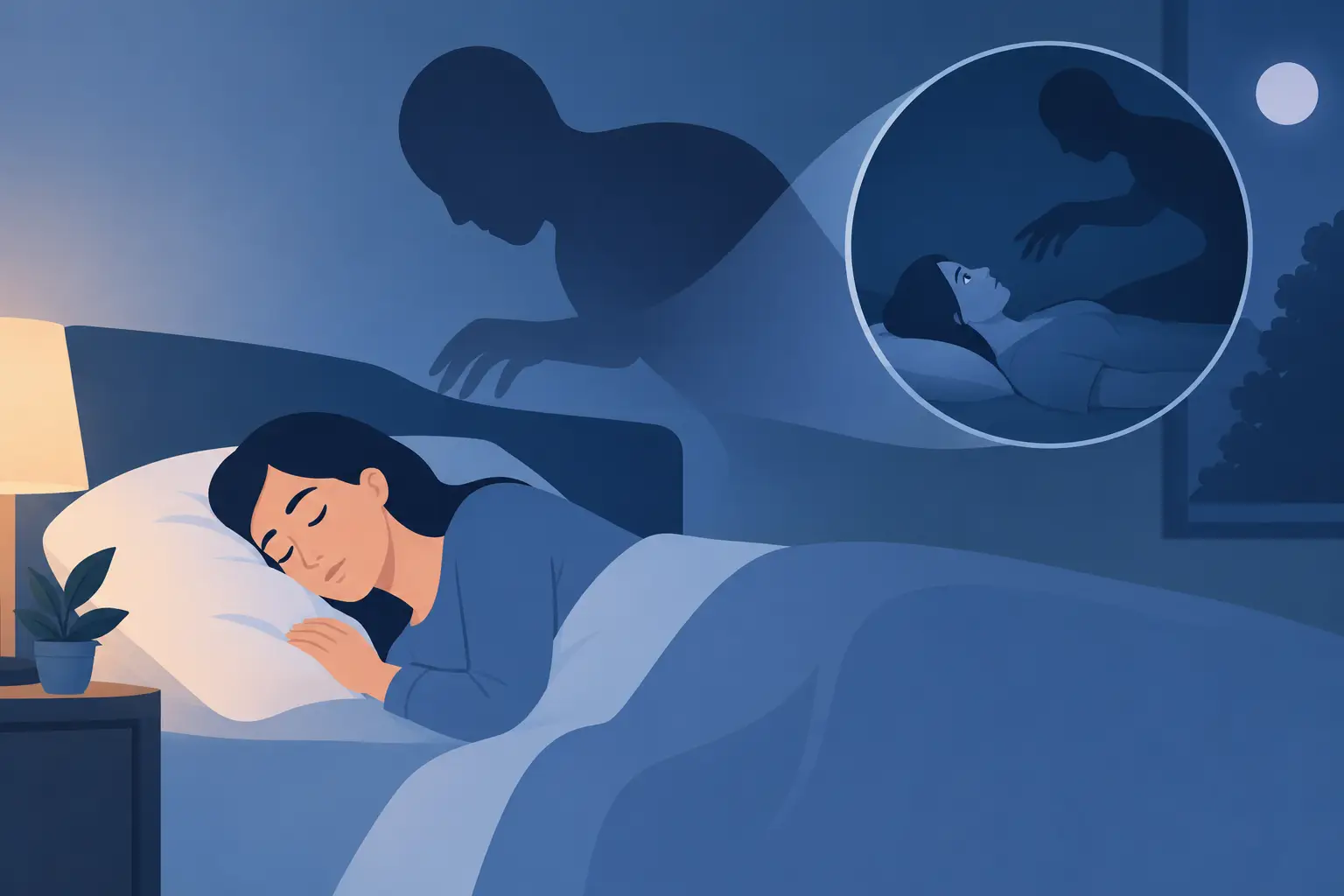
An episode ends. You can move again. Then, often before you have fully caught your breath, a frightening question arrives: can paralysis return? If what you experienced was sleep paralysis, the answer is yes, it can recur. But a repeat episode does not mean you are permanently losing the ability to move, nor does it mean you have done anything wrong.
Sleep paralysis can feel intensely real because it happens at the border of sleep and wakefulness. Your awareness comes online while your body is still in the temporary muscle-relaxed state that normally protects you during dreaming. That mismatch can last seconds or a few minutes, and it may happen once, occasionally, or in clusters during a stressful stretch of life.
The uncertainty is often the hardest part. Knowing why recurrence can happen gives you something steadier to hold onto: a way to notice patterns, reduce what may be contributing, and decide when it is time to seek medical guidance.
Can paralysis return after sleep paralysis?
Yes. Sleep paralysis can return, sometimes after weeks or months without an episode and sometimes several times within a short period. For many people, episodes are infrequent. Others notice that they become more likely during periods of disrupted sleep, emotional strain, travel, illness, or major changes in routine.
A recurring episode is not necessarily a sign that sleep paralysis is getting progressively worse. Sleep is sensitive to change. When your schedule shifts, your sleep becomes fragmented, or your nervous system is under more pressure than usual, the transitions between sleep stages can become less smooth. That can make the awake-but-unable-to-move experience more likely.
Still, each person’s pattern is different. Some people have a clear trigger, such as sleeping on their back after several short nights. Others see no obvious connection at first. That is why a gentle record of what was happening around an episode can be more useful than trying to force a single explanation.
Why sleep paralysis may repeat
Sleep paralysis is most closely linked with REM sleep, the stage where vivid dreaming is common. During REM, the brain naturally reduces most voluntary muscle movement. Usually, this turns on and off without you noticing. During sleep paralysis, awareness and muscle control do not line up for a brief time.
Certain circumstances may make that timing more likely to slip. Irregular sleep timing is one of the most common. Going to bed much later than usual, waking early for work or school, pulling an all-nighter, or catching up on sleep on weekends can all disrupt the rhythm your body expects.
Stress can matter too, though it is not a personal failing or a simple cause-and-effect rule. When you are worried, grieving, overloaded, or emotionally on alert, sleep may become lighter and more interrupted. That does not mean an episode is “all in your head.” It means your sleep and nervous system are connected, and both deserve care.
Other possible contributors include sleeping on your back, jet lag, inconsistent naps, and some sleep conditions that fragment rest. Alcohol, recreational substances, and changes in medication can affect sleep for some people as well. If you suspect a medication is affecting your sleep, speak with the clinician who prescribed it before changing how you take it.
Recurrence can feel scarier than the first episode
After a first episode, many people start sleeping with one ear open for it. You may delay bedtime, avoid certain positions, keep lights or sound on, or repeatedly check whether you can move. These responses make sense. Your brain is trying to protect you from something it experienced as a threat.
Unfortunately, fear of another episode can also make rest harder. A night of tense, watchful sleep may leave you more tired, and sleep disruption can be part of the pattern behind recurrence. The goal is not to blame yourself for being scared. It is to create a small amount of safety around sleep again, one night at a time.
When an episode happens, it may help to focus on a tiny movement rather than fighting your entire body. Try gently moving a fingertip, toe, tongue, or eyelid. Slow, steady breathing can also give your attention an anchor. If you notice dreamlike sounds, images, pressure, or a sensed presence, remind yourself that these can occur when dreaming and waking overlap. They can be deeply unsettling, but they are not proof that you are in danger.
Afterward, give yourself a moment to reorient. Turn on a light if that feels comforting, take a sip of water, or write down a few details. You do not need to analyze the experience at 3 a.m. A brief note is enough.
Track patterns without turning sleep into a test
Tracking is not about controlling every variable or achieving perfect sleep. It is about replacing a vague fear of “What if it happens again?” with kinder, more useful information.
For two to four weeks, consider noting your bedtime and wake time, how rested you felt, whether you napped, your stress level, and whether an episode occurred. You might also record sleep position, recent travel, illness, or anything that unusually disrupted your routine. Keep it simple enough that you will actually use it.
Over time, you may notice that episodes follow several late nights, occur more often during exams or deadlines, or are not connected to a pattern you can identify. All three outcomes are useful. A pattern can suggest practical changes. No clear pattern can be reassuring too, because it reminds you that you do not have to solve the episode perfectly in order to respond to it with care.
If bedtime feels loaded after an episode, choose one stabilizing routine rather than a long list of rules. Aim for a reasonably consistent wake time, lower stimulation before bed, and give yourself a calm transition into sleep. If back-sleeping seems connected for you, experimenting with side sleeping may be worth trying, but it is not a guarantee and it does not work for everyone.
When recurring paralysis needs medical attention
Sleep paralysis itself is usually brief and not dangerous, but not every experience of weakness or immobility during sleep should be assumed to be sleep paralysis. New or ongoing symptoms deserve appropriate care.
Seek urgent medical help for sudden weakness or numbness on one side of the body, facial drooping, trouble speaking, confusion, a severe new headache, chest pain, or trouble breathing. These symptoms are not typical sleep paralysis, particularly if they happen while you are fully awake or continue after the episode.
It is also a good idea to speak with a doctor or sleep specialist if episodes are frequent, are making you afraid to sleep, are causing major daytime exhaustion, or happen alongside sudden loss of muscle strength during laughter or strong emotion. A clinician can help rule out other sleep concerns and talk through options that fit your situation. You do not need to wait until things feel unbearable to ask.
If you are a teen or young adult living with family, consider telling one trusted person what your episodes are like. You can keep it simple: “Sometimes I wake up before my body can move. It passes, but it scares me.” Being understood by even one person can make the next episode feel less isolating.
Make room for reassurance, not shame
People often stay quiet about sleep paralysis because the experience sounds strange when put into words. Hallucination-like sensations, pressure, and complete stillness can feel too personal or too frightening to explain. But sleep paralysis is a recognized sleep experience, and you are not alone in having it.
Recurring episodes can be disruptive, yet they do not define your sleep or your ability to rest. Notice what your body may be asking for, keep your observations with compassion, and get support when fear starts taking up too much space. Reclaiming your rest may begin with something very small: remembering, during or after an episode, that it will pass and that you do not have to face the uncertainty alone.