
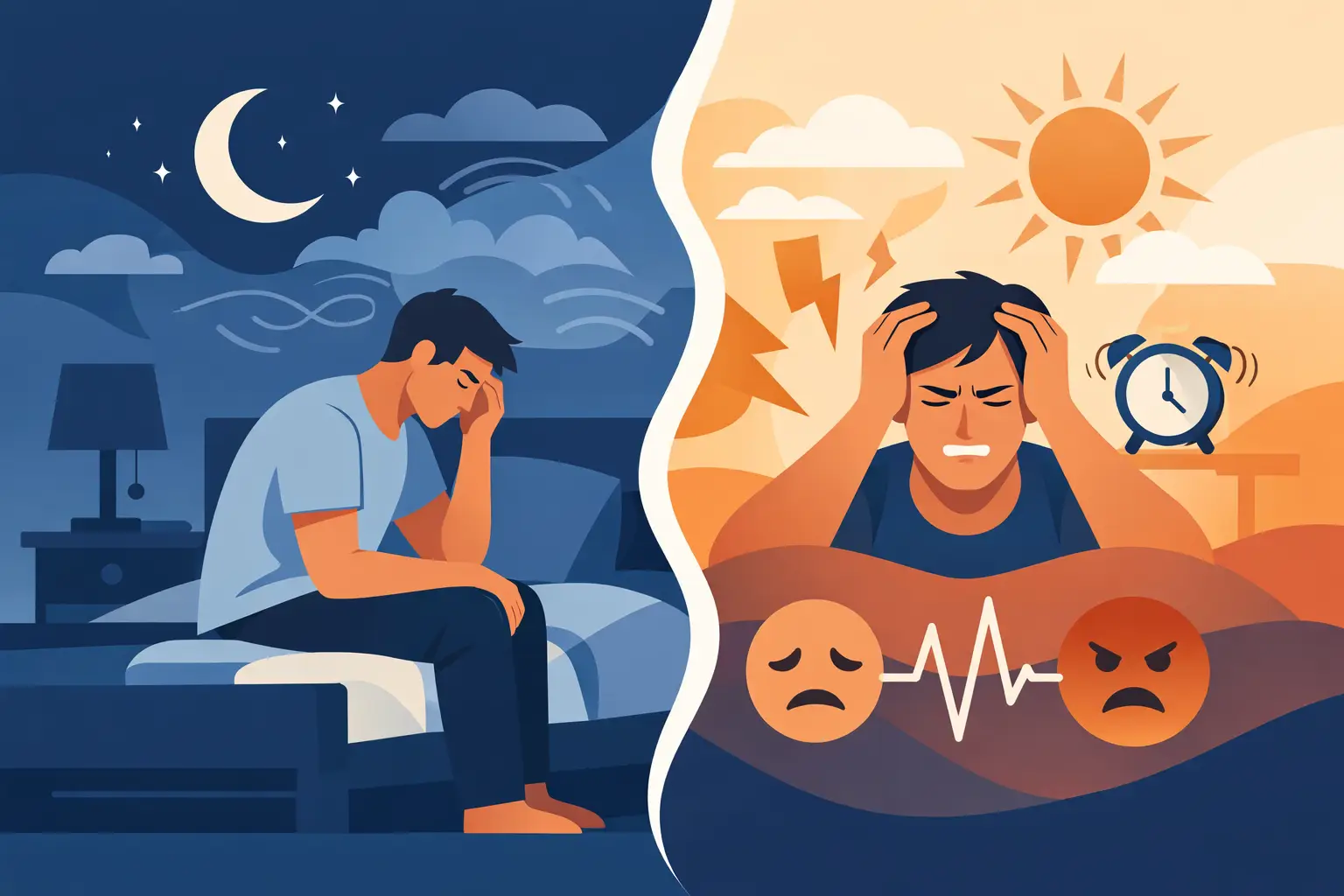
If your episodes seem to show up after late nights, shifting bedtimes, or a week of broken sleep, you may be asking: can poor sleep schedule cause episodes? For many people who experience sleep paralysis, the answer is yes – not as a guaranteed cause every time, but as a common and very real trigger.
That connection can feel frustrating. Sleep paralysis is already intense enough without wondering whether a messy schedule is making it worse. The good news is that sleep patterns are one of the more trackable parts of the picture. When you understand how timing, stress, and sleep stages interact, the experience often starts to feel less random and less frightening.
Can poor sleep schedule cause episodes of sleep paralysis?
Sleep paralysis happens when your mind becomes aware while your body is still in the muscle-off state tied to REM sleep. REM is the stage where vivid dreaming is most common. During REM, your body naturally reduces muscle activity so you do not act out dreams. If awareness returns before that state fully lifts, you may feel awake but unable to move for a short time.
A poor sleep schedule can increase the chances of that mismatch. Irregular bedtimes, frequent sleep deprivation, staying up far later than usual, and sleeping at inconsistent hours can all disrupt how your brain moves through sleep cycles. That disruption may make REM sleep feel less stable, especially when your body is trying to catch up after not getting enough rest.
This does not mean every late night will lead to an episode. It also does not mean sleep schedule is the only factor. Some people have episodes mostly during stressful periods. Others notice a stronger link with sleeping on their back, anxiety, jet lag, naps, or fragmented sleep. But schedule disruption comes up often because it can affect both sleep quality and REM timing.
Why irregular sleep can make episodes more likely
Your sleep system likes rhythm. When bedtime and wake time move around a lot, your body has a harder time predicting when to release the signals that help you feel sleepy, stay asleep, and cycle smoothly through the night.
When that rhythm gets thrown off, REM sleep may become more uneven. After sleep loss, your brain can also spend more time in REM once you finally get to sleep. That matters because sleep paralysis tends to happen around sleep-wake transitions that involve REM. In simple terms, if REM is arriving at odd times or rebounding after poor sleep, the chances of a mixed state may rise.
There is also the stress piece. A poor sleep schedule and stress often travel together. Maybe you are up late because your mind will not settle, or your work and school schedule keeps changing, or your sleep has become something you dread. That combination can leave your nervous system more activated at night, which can make sleep feel lighter, more fragmented, and less predictable.
For people who already feel anxious about episodes, this can turn into a loop. You sleep irregularly, an episode happens, you become more worried about going to bed, and your schedule becomes even less steady. That loop is common, and it is not a personal failure.
What a “poor sleep schedule” actually looks like
It is not only about going to bed late. A poor sleep schedule can mean any pattern that keeps your sleep timing inconsistent or cuts your sleep short on a regular basis.
For one person, it might be weekday sleep deprivation followed by sleeping half the day on weekends. For another, it might be rotating shifts, all-nighters, frequent travel across time zones, or a cycle of crashing early one night and staying up until 3 a.m. the next. Even if total sleep sometimes looks fine on paper, the timing may still be unstable enough to affect episodes.
This is where nuance matters. Some people naturally prefer later bedtimes and do well with a steady night-owl rhythm. That is different from constantly changing when you sleep. Often, the bigger issue is inconsistency rather than any single bedtime.
Other triggers that can overlap with sleep schedule
If you are trying to make sense of your episodes, it helps to think in patterns rather than single causes. Sleep schedule is important, but it usually sits alongside other influences.
Stress and anxiety can raise the risk, especially if they make sleep lighter or more fragmented. Sleep deprivation is a major one because it changes sleep pressure and can lead to REM rebound. Sleeping on your back is another commonly reported trigger, though not for everyone. Napping, especially at unusual times, may play a role for some people. So can major life disruption, illness, or anything that throws off your body clock.
This is why two people can have very different experiences. One person might have episodes almost only after staying up too late. Another may keep a fairly regular schedule and still have episodes during emotionally intense periods. Both experiences are valid.
How to tell if your schedule is part of the problem
Instead of asking whether your schedule is perfect, ask whether your episodes cluster around certain patterns. That question is usually more useful.
Notice what happened in the 24 to 72 hours before an episode. Did you sleep less than usual? Were you going to bed at a very different time? Did you wake repeatedly during the night? Were you catching up on sleep after several short nights? Did stress spike at the same time?
This kind of reflection can be more helpful than trying to remember isolated details weeks later. A simple log can reveal patterns you would otherwise miss. You do not need anything complicated. Record when you went to bed, when you woke up, how rested you felt, whether you napped, your stress level, your sleeping position if you know it, and when an episode happened.
Over time, patterns tend to become clearer. You may notice, for example, that episodes happen after two or three nights of shortened sleep rather than after one bad night. Or that they show up during schedule changes more than during stable but imperfect weeks. That kind of information can help you respond with more confidence and less fear.
What to do if a poor sleep schedule seems connected
If you suspect schedule disruption is contributing, the goal is not to create a flawless bedtime routine overnight. That pressure often backfires. A steadier rhythm is usually more helpful than trying to control every detail.
Start with consistency. Pick a wake time you can keep most days, including weekends if possible. Wake time often matters more than forcing an exact bedtime, because it helps reset your body clock. Then give yourself a wind-down period that is calm and predictable, especially on nights when you feel nervous about sleep.
Try to reduce extremes. If you have had a rough week, sleeping a little longer can help, but giant swings between weekdays and weekends may keep your rhythm unstable. The same goes for all-nighters followed by marathon catch-up sleep. Gentle correction tends to work better than dramatic changes.
If stress is clearly part of the pattern, address that too. Sometimes what looks like a schedule problem is partly a nervous system problem. Racing thoughts, dread at bedtime, or feeling on edge after an episode can all make regular sleep harder to maintain. Grounding practices, journaling before bed, and reducing the pressure to sleep perfectly can help settle some of that activation.
And if episodes are frequent, changing, or deeply distressing, it may be worth talking with a healthcare professional or sleep specialist. Support matters, especially if you are also dealing with insomnia, heavy daytime sleepiness, or symptoms that do not seem to fit sleep paralysis alone.
Reclaiming a sense of control
One of the hardest parts of sleep paralysis is how random it can feel. But if poor sleep schedule is one of your triggers, that also means there may be something observable and workable in the mix.
Not every episode can be prevented. That is the honest answer. But many people do notice fewer episodes when their sleep becomes more regular, their stress is better supported, and they stop treating each frightening night as proof that something is deeply wrong.
You are not imagining the connection. You are not overreacting. And you do not have to figure it out all at once. Paying attention to your timing, your sleep debt, and your stress patterns is a steady way to reclaim your rest – one calmer night at a time.