
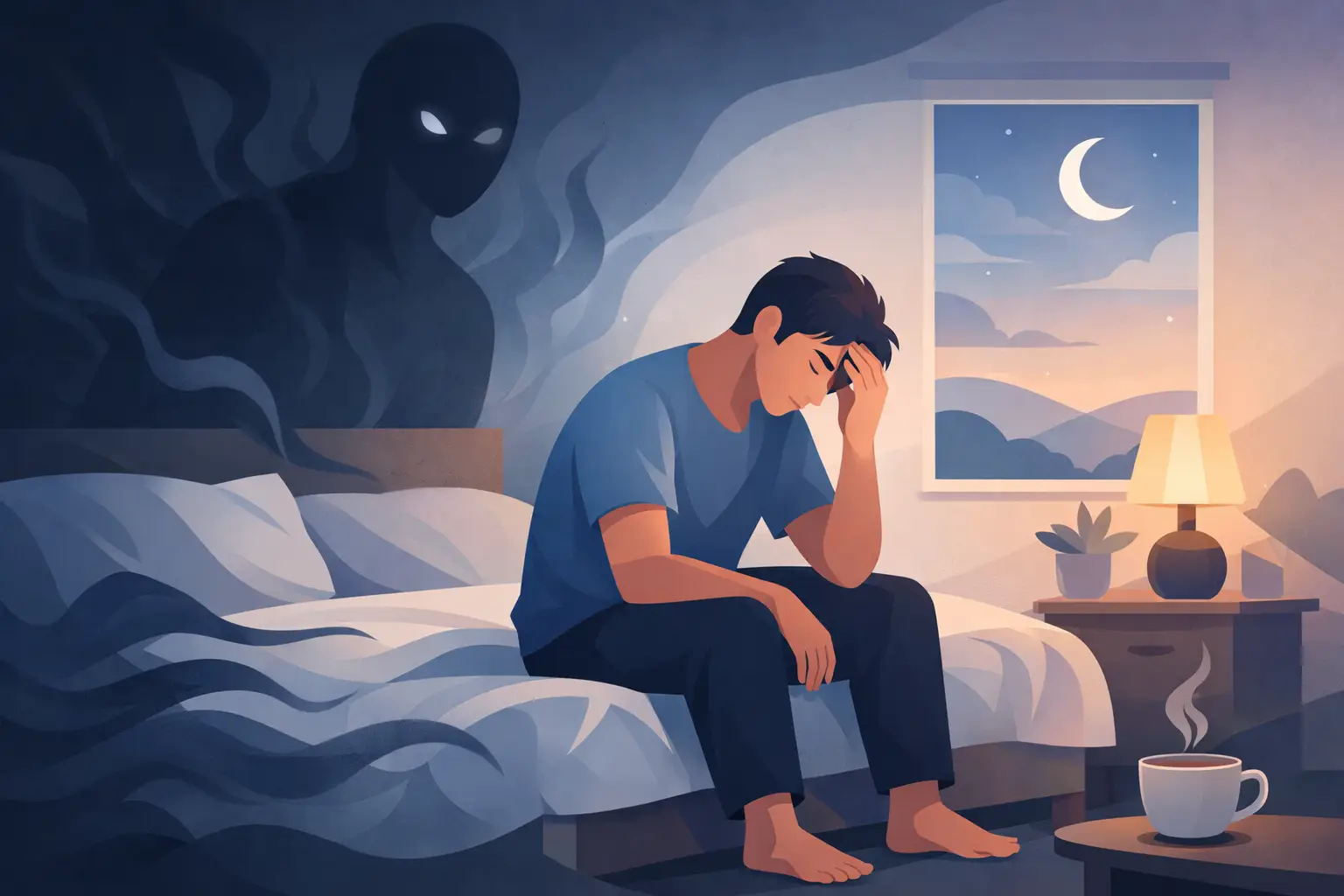
Waking up unable to move can leave your heart pounding long after the episode ends. If you are searching for how to calm down after sleep paralysis, the first thing to know is this: what you felt was real, but it does not mean you were in danger. Sleep paralysis can be intense, confusing, and deeply unsettling. It can also pass, and the fear that follows can be softened.
The minutes after an episode often feel strangely fragile. Your body may be awake, but your nervous system can still act like something threatening just happened. That reaction makes sense. Sleep paralysis sits in an uncomfortable space between sleep and wakefulness, and your brain may need a little time to catch up and realize you are safe.
How to calm down after sleep paralysis in the moment
Start with the most basic reset available to you: orient yourself to the room. Look at one familiar object and name it quietly. Notice the light, the temperature, the position of your body in the bed. This may sound small, but it helps shift your brain out of the leftover alarm state that often follows an episode.
Then bring your attention to your breathing, without trying to force it into a perfect rhythm. Many people instinctively take huge breaths when they are scared, but that can sometimes make the body feel more panicked. It usually works better to exhale slowly first, then let the next inhale come naturally. A few rounds of longer exhales can signal to your nervous system that the immediate threat has passed.
If your chest still feels tight, try gentle movement rather than abrupt movement. Wiggle your fingers. Press your feet into the mattress. Roll your shoulders once you are able. Sudden action can feel jarring when you are already on edge, while small movements can help your body feel present again.
Talking to yourself in a steady, factual way can also help more than people expect. Simple phrases like, “That was sleep paralysis,” “It is over,” and “My body is safe right now” give your brain something solid to hold onto. Fear grows fast in silence, especially after a disorienting experience. Calm, plain language can interrupt that spiral.
Why the fear lingers after the episode ends
Sleep paralysis is not just about temporary immobility. For many people, it comes with a rush of dread, pressure, vivid sensations, or the feeling that someone is in the room. Those experiences can be so intense that even after movement returns, your body may still be acting as if the danger is ongoing.
That does not mean you are overreacting. It means your nervous system is doing what nervous systems do when something feels threatening. In sleep paralysis, part of the brain is awake while parts of normal REM sleep processes are still fading out. That mismatch can create a very convincing sense of fear.
This is one reason reassurance alone does not always work right away. You might know logically that the episode is over, but your body still needs help settling. That is why grounding, breathing, and gentle orientation matter. They give your mind and body a chance to reconnect.
What to do in the first 10 minutes after sleep paralysis
If you can, sit up slowly or change positions once you feel able. A shift in posture can help break the feeling that you are still stuck in the episode. Some people prefer to turn on a soft light. Others feel better staying in a dim room and focusing on their breath. It depends on what feels least activating for you.
Water can help, not because it stops sleep paralysis, but because it gives you a simple physical action to complete. Taking a sip, washing your face, or holding something cool can make the moment feel more concrete and less dreamlike.
If your thoughts are racing, resist the urge to immediately search the internet while you are still panicked. When fear is high, alarming explanations can hit harder than they normally would. It is usually better to calm your body first and look for information once you feel more grounded.
If someone you trust is nearby, you may want brief reassurance. Not everyone wants to talk right away, but hearing a calm voice can help bring you back into the present. If you are alone, a voice note to yourself can serve a similar purpose. Keep it simple: what happened, how you feel, and what you need next.
How to calm down after sleep paralysis when you are afraid to fall back asleep
For many people, the hardest part is not the episode itself but the fear of it happening again. That fear can keep you awake, and lost sleep can make future episodes more likely. It is a frustrating loop.
If you are too activated to sleep again immediately, give yourself a short reset outside the bed if possible. Sit somewhere quiet, keep the lighting low, and avoid anything overly stimulating. The goal is not to fully wake yourself up for the day. The goal is to help your body feel safe enough to return to rest.
This is a good time for low-effort grounding. Hold a blanket around your shoulders. Notice five things you can see. Keep your breathing easy and unforced. If your mind starts predicting another episode, return to what is true right now: you are awake, you are moving, and this moment is different from the last one.
Some people find comfort in a familiar routine after an episode, like drinking water, washing their face, and getting back into bed in the same order each time. Routine can reduce uncertainty. It does not guarantee prevention, but it can make the aftermath feel less chaotic.
What helps beyond the moment itself
If sleep paralysis happens more than once, calming down after each episode becomes easier when you start noticing patterns around them. Episodes are often more common during times of sleep disruption, stress, irregular schedules, or sleeping on your back. That does not mean every episode has a single clear cause. It just means your experience may have repeatable conditions around it.
Tracking can be surprisingly calming because it turns a blurry, frightening event into something observable. You might note when the episode happened, how long it seemed to last, what your sleep had been like in the days before, and how distressed you felt afterward. Over time, patterns may appear. Even when they do not, the act of recording can help you feel less powerless.
This is also where support matters. Sleep paralysis can feel isolating because it is often misunderstood or brushed off. Reading or hearing that other people have experienced the same thing can reduce the sense that something is uniquely wrong with you. That emotional shift matters. Feeling less alone often makes the next episode less terrifying, even if it is still unpleasant.
When calming down is harder than usual
Sometimes an episode hits especially hard. Maybe you had vivid hallucinations. Maybe you were already stressed. Maybe you have had repeated episodes and your body now reacts with fear the second you wake up at night. In those cases, calming down may take longer, and that does not mean you are failing.
It may help to think in layers. First, settle your body with breath, orientation, and gentle movement. Then settle your thoughts with simple facts. Later, when you feel more stable, reflect on what might have made this episode harder than others. Stress, sleep loss, anxiety, and major life changes can all raise the intensity.
If episodes are frequent, causing major distress, or affecting your sleep consistently, it may be worth talking with a healthcare professional. Unfreeze is built around that middle ground many people need – not sensationalized advice, not clinical overload, just structured support to help you understand patterns and feel less alone.
A calmer response can be learned
You may not be able to control every episode, but you can change what happens after one. The goal is not to pretend sleep paralysis feels easy. It is to shorten the path from panic to safety. The more often you practice a steady response, the more familiar that path can become.
Next time, start small. Look around the room. Exhale slowly. Move one part of your body. Remind yourself what happened. Then let your body catch up to the truth your mind is learning: you are here, you are safe, and you can reclaim your rest.