
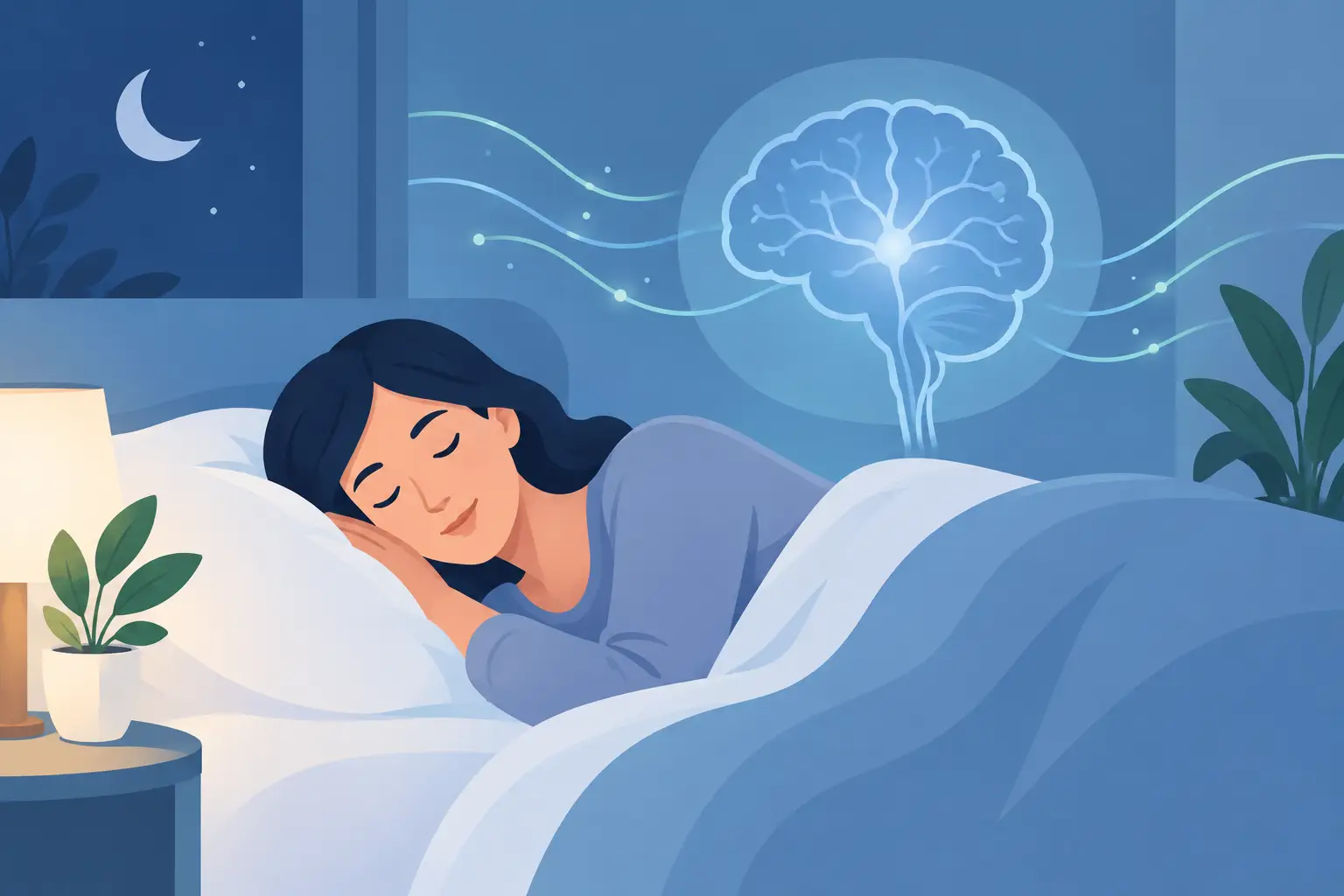
A hard night can leave your body feeling as if it never got the message that you are safe. Maybe you wake from sleep paralysis with your heart racing, or maybe you lie down already bracing for another episode. This nervous system sleep guide is not about forcing yourself to relax. It is about creating a few steady signals that can make sleep feel less threatening over time.
Sleep paralysis can be frightening, especially when it comes with vivid sensations, pressure, or the feeling that someone is in the room. Those experiences can make your nervous system more watchful at bedtime. That response is understandable. You are not failing at sleep, and you are not alone.
Why your nervous system can stay alert at night
Your nervous system is always taking in information about safety. During stress, uncertainty, or disrupted sleep, it may become more likely to stay in a protective, alert state. You might notice tense shoulders, racing thoughts, shallow breathing, a need to check the clock, or a sudden jolt of fear just as you begin to drift off.
Sleep paralysis itself happens when awareness returns before the muscle immobility of REM sleep has fully lifted. It is not a sign that your body is broken or that you are losing control. But the fear after an episode can affect what happens next: you may delay bedtime, sleep lightly, or become more aware of every sensation. That can create a difficult loop of irregular sleep and heightened vigilance.
The goal is not to eliminate every anxious thought before bed. Trying to control sleep too tightly can add pressure. Instead, aim for a bedtime environment and routine that tells your body, repeatedly and gently, that it can shift out of high alert.
A nervous system sleep guide that starts before bedtime
The most useful sleep support often begins in the hours before you get into bed. Your body responds to patterns more than one perfect night.
Keep your wake time as steady as you can
A consistent wake time helps anchor your internal clock, even after a rough night. You do not need to follow it perfectly, and sleeping late once in a while is not a failure. But large day-to-day shifts can make it harder to predict when you will feel sleepy and may increase sleep disruption for some people.
If an episode leaves you exhausted, be kind to yourself. A short, earlier-in-the-day nap may help some people, while long or late naps can make nighttime sleep harder. Notice what actually happens for you rather than assuming one rule fits everyone.
Give your body a transition period
Going straight from stressful messages, intense videos, homework, or work into bed asks a lot from your nervous system. Build a small buffer, even if it is only 10 minutes. Lower the lights, put your phone aside if you can, wash your face, stretch gently, or sit somewhere comfortable with a familiar object nearby.
The activity matters less than the message behind it: the day is ending, and you do not need to solve everything right now. If silence makes you feel more alert, a calm audiobook, quiet music, or a simple familiar show may be more settling than trying to meditate through panic.
Use breathing as an invitation, not a test
Slow breathing can support the body’s calming systems, but it should never feel like another task you have to get right. Try letting your exhale be a little longer than your inhale for a minute or two. For example, breathe in comfortably, then breathe out slowly without forcing it.
If focusing on breath makes you anxious, skip it. Grounding can also mean noticing the weight of a blanket, pressing your feet into the floor, or naming a few ordinary things you can see around you. The best practice is the one that feels manageable enough to repeat.
What to do when fear shows up in bed
Fear at bedtime often makes sense in context. If sleep paralysis has happened before, your brain may treat the bed, a certain position, or the moment of falling asleep as a warning sign. Meeting that fear with criticism usually makes it louder.
Try a simple, believable phrase: “This feels scary, but I am here and I can take this one moment at a time.” You do not have to convince yourself that nothing uncomfortable will happen. You are reminding yourself that fear is a body response, not a prediction.
If you have been awake for a while and frustration is building, it can help to leave the bed briefly and do something low-stimulation in dim light. Return when you feel a little sleepier. This is not about following a rigid rule or punishing yourself for being awake. It is a way to reduce the association between your bed and a long struggle.
Some people feel safer sleeping on their side, especially if they have noticed episodes more often while lying on their back. Research and personal experience do not make this a guarantee, but it can be a reasonable experiment. Use pillows for comfort and choose a position that helps you feel supported rather than trapped.
After sleep paralysis: help your body come back to the present
When an episode ends, your body may still be full of adrenaline. Before searching for answers or checking the time, orient yourself to the room. Notice where you are. Move a finger, your toes, or your jaw. Feel the surface beneath you and take a sip of water if that is available.
Then name what happened in plain language: “I had a sleep paralysis episode. It ended.” This can sound simple, but clear labeling may help separate the experience from the frightening story your mind starts building around it.
You may not fall asleep again immediately. Give yourself permission to take a short reset. Turn on a soft light, sit up, or step into another room for a few minutes if that feels better. The aim is to make your next choice from a steadier place, not to rush yourself back into sleep.
Track patterns without turning sleep into a project
Tracking can replace vague dread with useful information. It can also become stressful if every night feels like a test. Keep it light and focus on patterns over several weeks, not a single episode.
After an episode or difficult night, you might note your bedtime and wake time, how rested you felt, stress level, naps, caffeine or alcohol, sleep position, and anything unusual that happened that day. You can also write down how the episode felt emotionally. Was it fear, confusion, frustration, or relief when it ended?
Over time, you may notice that episodes are more likely after sleep loss, shifting schedules, illness, stress, or sleeping on your back. You may also learn that a particular wind-down habit helps you feel less afraid. A private tool such as Unfreeze can make this reflection more structured while keeping the experience centered on your own patterns and privacy.
Patterns are clues, not proof that you caused an episode. Sleep is affected by many things, including factors you cannot control. Use what you learn to make gentle adjustments, not to blame yourself.
When extra support is worth seeking
Sleep paralysis is common and often harmless, but you deserve support if it is frequent, intensely distressing, or making you afraid to sleep. Consider speaking with a healthcare professional if you have severe daytime sleepiness, sudden muscle weakness with strong emotions, unusual behaviors during sleep, loud snoring or breathing pauses, or a major change in your sleep.
A clinician can help rule out other sleep concerns and talk through options without dismissing the fear of your experience. Emotional support matters, too. If anxiety around sleep is taking up a lot of space in your life, a mental health professional can help you build coping tools that fit you.
Tonight, choose one small signal of safety: dim the lights, write down one worry for tomorrow, or let your body settle against the mattress without asking it to perform. Reclaiming your rest often begins with that kind of quiet permission.