
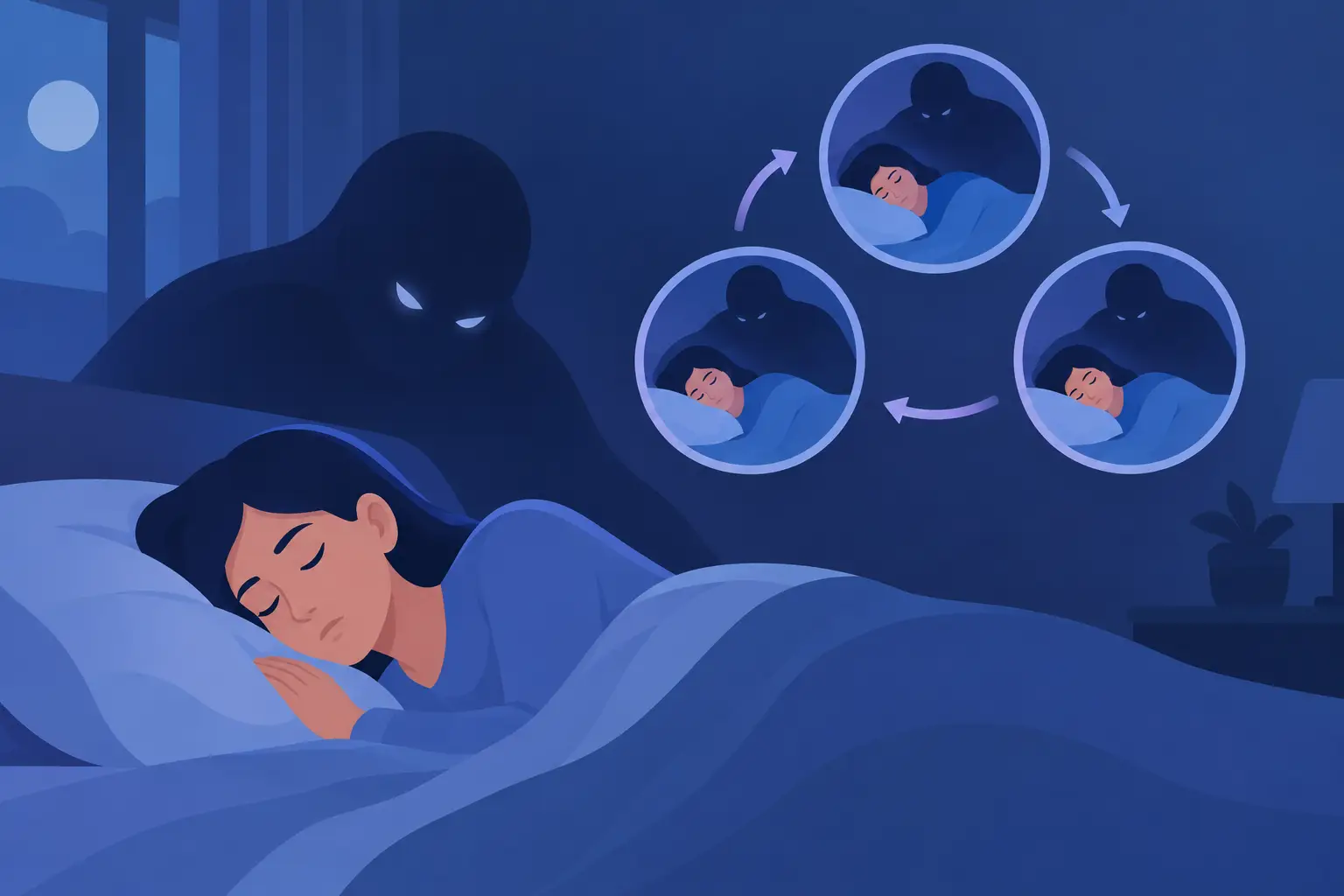
A stretch of sleep paralysis episodes can make bedtime feel unpredictable. You may have gone weeks or months without one, then suddenly wake unable to move several nights close together. If you are wondering why episodes recur, the short answer is that sleep paralysis often reflects a pattern in how your sleep, stress, and nervous system are interacting – not a personal failure and not necessarily a sign that something is dangerously wrong.
Sleep paralysis happens when part of the body remains in the muscle-relaxed state of REM sleep while your awareness returns. That overlap can last seconds or minutes, but the fear can linger much longer. Understanding what makes that overlap more likely can help you feel less caught off guard.
Why episodes recur during sleep paralysis
Recurring episodes do not always have one clear cause. For many people, they show up when several small disruptions happen at once: a later bedtime, less sleep than usual, a stressful week, and an irregular wake-up time. One change may not lead to an episode on its own. Together, they can make your sleep more fragmented and increase the chance of waking during REM sleep.
This is why sleep paralysis can feel random while still having recognizable patterns over time. The goal is not to monitor yourself perfectly or blame every difficult night on a single choice. It is to gently notice what was happening around your episodes, so you can respond with more understanding and less fear.
Sleep schedule changes can make REM sleep less predictable
Your brain tends to do best with a reasonably consistent rhythm. When you sleep much later than usual, wake at very different times, pull an all-nighter, or try to catch up on sleep over the weekend, your sleep stages can shift around.
REM sleep becomes longer toward morning. If you are sleeping in, waking repeatedly, or returning to sleep after an alarm, you may be more likely to wake from REM while your body is still in its temporary sleep-related paralysis. That does not mean sleeping in is inherently bad. It simply means timing may matter for some people, especially after a period of missed sleep.
Stress can follow you into sleep
Stress does not switch off the moment your head hits the pillow. Work pressure, school deadlines, relationship conflict, grief, financial worries, and even the anxiety of anticipating another episode can leave your nervous system more alert. That can lead to lighter, more interrupted sleep.
The connection is not always immediate. An episode might happen after several demanding days rather than on the single worst day. For some people, the fear of sleep paralysis becomes part of the cycle: they delay bedtime to avoid it, become more sleep-deprived, and then have a greater chance of another episode. Recognizing this loop can be a compassionate first step toward changing it.
Fragmented sleep matters as much as total sleep
You can spend enough hours in bed and still have disrupted sleep. Noise, temperature changes, nightmares, reflux, pain, frequent notifications, alcohol, illness, or a partner moving around may all cause brief awakenings you barely remember.
Those interruptions can create more opportunities to surface from REM sleep. This is one reason two people with the same bedtime may have very different experiences. Sleep paralysis is not only about how long you sleep. It can also be about how continuous and settled that sleep feels.
Sleeping position may play a role for some people
Many people notice episodes more often when sleeping on their back. Research has found an association between back sleeping and sleep paralysis, though it does not mean that position causes every episode or that everyone needs to avoid it.
If your own notes show a consistent connection, experimenting with side sleeping may be worthwhile. A pillow behind your back or between your knees can make the position easier to maintain. Think of this as a low-pressure experiment, not a rule you must follow perfectly.
Patterns are personal, not proof that you caused it
It can be tempting to search for one explanation after every episode: Was it the coffee? The late-night show? The stressful conversation? Sometimes an answer is obvious, but often it is not. Sleep is influenced by many things at once, including factors outside your control.
A useful approach is to look for trends across several episodes rather than treating one night as evidence. For example, you might notice episodes cluster after short nights, during exam periods, after travel, or when you wake and fall back asleep repeatedly in the morning. Or you may find no strong pattern at all. Both outcomes are valid.
Try recording a few simple details after an episode, when you feel ready:
- the approximate time you fell asleep and woke up
- whether your schedule was different from usual
- stress level that day or week
- sleep position, if you remember it
- alcohol, substances, medications, illness, or other changes that may affect sleep
- what the episode felt like, including fear level and any sensations you want to remember
Keep the log brief. The purpose is not to turn rest into a project. It is to give your experience some context. Over time, a private record can replace the thought, “This is happening for no reason,” with “I can see what may be making this more likely.”
What can reduce the chance of another episode
There is no guaranteed way to prevent sleep paralysis, and putting pressure on yourself to control it can add more stress. Still, a few steady habits may reduce the conditions that make episodes more likely.
Start with the most realistic change: aim for a more consistent wake-up time, especially after a late night. Give yourself enough time for sleep when possible, and avoid deliberately cutting sleep short to keep up with a demanding schedule. If you are experimenting with back sleeping less often, make that change gently rather than worrying about your position all night.
A short wind-down can also help signal safety to your body. This might be dimming bright screens, taking a warm shower, listening to something calm, stretching lightly, or writing down tomorrow’s tasks so they are not circling in your mind. The right routine is the one you can actually repeat, not the most elaborate one.
If an episode begins, focus on the smallest available action. Some people find it helpful to slow their breathing, remind themselves that the episode will pass, or concentrate on moving one finger, toe, or facial muscle. You do not need to fight your whole body at once. A simple internal phrase such as, “This is sleep paralysis. I am safe. It will end,” can create a little space between the experience and the panic.
When recurring episodes deserve more support
Sleep paralysis is common and often harmless, but you deserve support if it is disrupting your life. Consider speaking with a doctor or sleep specialist if episodes are frequent, cause significant distress, leave you afraid to sleep, or occur alongside severe daytime sleepiness.
It is also worth getting professional guidance if you have sudden loss of muscle control during strong emotions, vivid dreamlike experiences when falling asleep or waking, loud snoring or gasping, or a major recent change in your sleep. A clinician can help rule out other sleep concerns and discuss care that fits your situation.
You do not have to wait until things feel unbearable to ask questions. Tracking your experiences can make that conversation easier, but you do not need a perfect record to be taken seriously.
Recurring sleep paralysis can feel isolating, especially when the experience is hard to explain to someone who has never had it. But an episode is a state transition in sleep, not a reflection of your strength or sanity. With calm information, a few observations, and support that respects your privacy, you can begin to reclaim your rest one night at a time.