
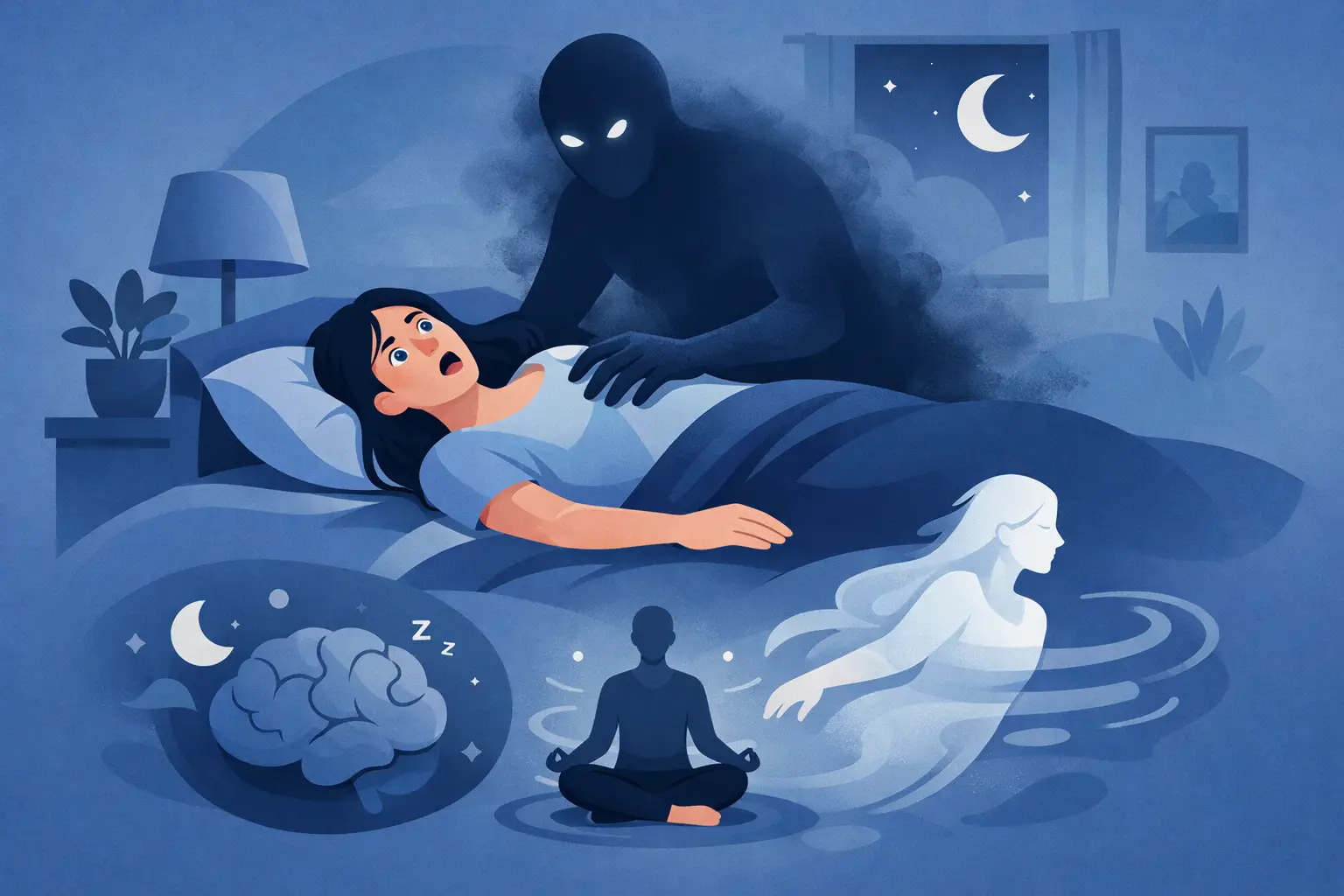
When sleep paralysis hits, the fear can arrive before your thoughts do. You wake up, but your body does not seem to follow. Your chest may feel heavy. The room may feel strange. Even if you have read about it before, the experience can still feel deeply personal and hard to shake. This sleep paralysis coping guide is here to help you respond with more clarity, less panic, and a little more self-trust.
Sleep paralysis is a real sleep phenomenon, not a sign that you are broken or losing control. It happens when your mind becomes aware before your body fully exits REM sleep, the stage where dreaming is most vivid and the body is naturally kept still. That mismatch can create a frightening moment, especially if you also notice pressure, sounds, or shadowy sensations. Those details can feel supernatural or dangerous in the moment, but they are commonly reported features of an episode.
What a sleep paralysis coping guide should actually do
A useful guide should do more than tell you to relax. Most people cannot simply calm down on command while they are temporarily unable to move. Real coping starts by reducing the shock of the experience, giving your brain a script to return to, and helping you notice patterns over time.
That matters because sleep paralysis often becomes a cycle of event, fear, and anticipation. One episode can leave you dreading sleep the next night. That dread can disrupt your schedule, increase stress, and make another episode feel more likely. Coping is not about forcing perfect sleep. It is about making the experience feel less mysterious and less powerful.
During an episode, aim for smaller wins
The first goal is not total calm. The first goal is orientation. If you can remember even one sentence, let it be this: this will pass.
Many people find it helpful to focus on one tiny action instead of trying to move their whole body. That might mean wiggling a toe, moving the tip of the tongue, or concentrating on one finger. Small movements can help signal the transition out of the episode. If that does not work right away, it does not mean you are stuck. It usually means your body still needs a few moments to catch up.
Your breathing may feel restricted, which can be especially alarming. Often, you are still breathing normally enough, but the body sensations of REM sleep can make it feel wrong or too shallow. Rather than trying to take a huge breath, try noticing the breath you already have. Count one inhale and one exhale. Then another. The point is not perfect breathing. The point is to give your mind something steady to hold.
If you experience visual or auditory sensations, try labeling them as part of sleep paralysis instead of arguing with them. A simple mental phrase like “this is an episode” can create a bit of distance. Fear tends to grow when the brain treats every sensation as immediate evidence of danger. Naming what is happening can reduce that spiral.
What to do right after sleep paralysis ends
The minutes after an episode matter. This is when many people either recover gently or accidentally reinforce the fear. If you can, sit up slowly and give yourself a moment before checking your phone or replaying every detail.
A simple reset helps. Take a sip of water. Turn on a soft light if darkness feels activating. Put your feet on the floor and notice a few ordinary things in the room. This kind of grounding can help your nervous system shift out of alarm mode.
Then decide what you need next. Some people settle best by going back to sleep with a comforting routine, especially if the episode was brief. Others feel better staying up for a few minutes until their body feels less tense. It depends on the intensity of the episode and what usually helps you feel safe. There is no prize for pushing yourself either way.
The patterns are often more useful than the episode itself
One of the most effective parts of any sleep paralysis coping guide is tracking. Not because you need to monitor yourself constantly, but because memory is unreliable when fear is involved. A quick log can turn a confusing event into information.
Write down when the episode happened, whether you were falling asleep or waking up, how much sleep you got, your stress level, and whether you slept on your back. Also note anything else that feels relevant, like an irregular schedule, a nap, alcohol, or a stretch of intense anxiety. You do not need a perfect spreadsheet. You need enough detail to notice repetition.
For some people, the biggest trigger is sleep deprivation. For others, it is disrupted routines, emotional stress, or sleeping in certain positions. Sometimes there is no obvious pattern at first, and that can be frustrating. Still, tracking helps because it moves the experience from “random nightmare thing” to “something I can observe.” That shift alone can reduce helplessness.
Build a routine that lowers the odds
You cannot guarantee that sleep paralysis will never happen again. But you can make episodes less likely by supporting more stable sleep.
Start with consistency. Going to bed and waking up at roughly the same times helps regulate the transitions between sleep stages. If your schedule changes a lot, aim for gradual improvement rather than perfection. A realistic routine is better than an ideal one you cannot keep.
Stress also matters, though not in a simplistic way. Not everyone gets sleep paralysis only when stressed, and reducing stress does not fix everything. But if your nervous system is already running hot, episodes can feel more intense and more memorable. Wind-down habits can help here: dimmer light, less stimulating content before bed, and a few minutes of quiet decompression instead of pushing yourself straight from doomscrolling into sleep.
Body position may play a role too. Some people notice more episodes while sleeping on their back. If that sounds familiar, a positional change is worth trying. It is not a universal rule, but it is one of those small adjustments that can matter.
The emotional part is real, and it deserves care
A lot of people minimize what they feel after sleep paralysis because they know, intellectually, that it is a sleep event. But understanding the science does not automatically erase the emotional impact. You can know what happened and still feel shaken, embarrassed, or afraid to sleep again.
That response makes sense. Sleep paralysis can create a powerful loss-of-control feeling. It can also be isolating, especially if past attempts to explain it were met with jokes, disbelief, or dramatic interpretations that made things worse. You are not overreacting by wanting support.
This is one reason private reflection and anonymous community spaces can be so helpful. Reading that other people have felt the same chest pressure, heard the same strange sounds, or worried about the same meanings can reduce the sense that you are the only one. A platform like Unfreeze is built around that idea: calm understanding, pattern recognition, and support without stigma.
When to get extra help
Sleep paralysis is often harmless, but frequent or highly distressing episodes deserve attention. If it starts affecting your willingness to sleep, your daytime functioning, or your mental health, it is worth talking with a qualified healthcare professional. The same is true if you have other sleep symptoms, such as overwhelming daytime sleepiness, sudden muscle weakness, or behaviors during sleep that feel unusual or unsafe.
Support does not have to mean jumping straight into a highly medicalized experience. Sometimes the next right step is simply sharing a clear record of what has been happening, how often, and what patterns you have noticed. That kind of information can make the conversation easier and more useful.
Reclaiming a sense of control
The hard part about sleep paralysis is not only the episode itself. It is the feeling that bedtime has become unpredictable. Coping does not mean forcing yourself to be fearless. It means learning that fear does not have to run the whole process.
Some nights will feel easier than others. Some strategies will help immediately, and some only start to matter when you use them consistently over time. That is normal. What matters is that each episode can become a little less unknown, a little less isolating, and a little less in charge of your rest.
You do not need to solve everything tonight. Start with one sentence you can remember, one small grounding step, and one note in a log tomorrow morning. That is how control begins to return.