
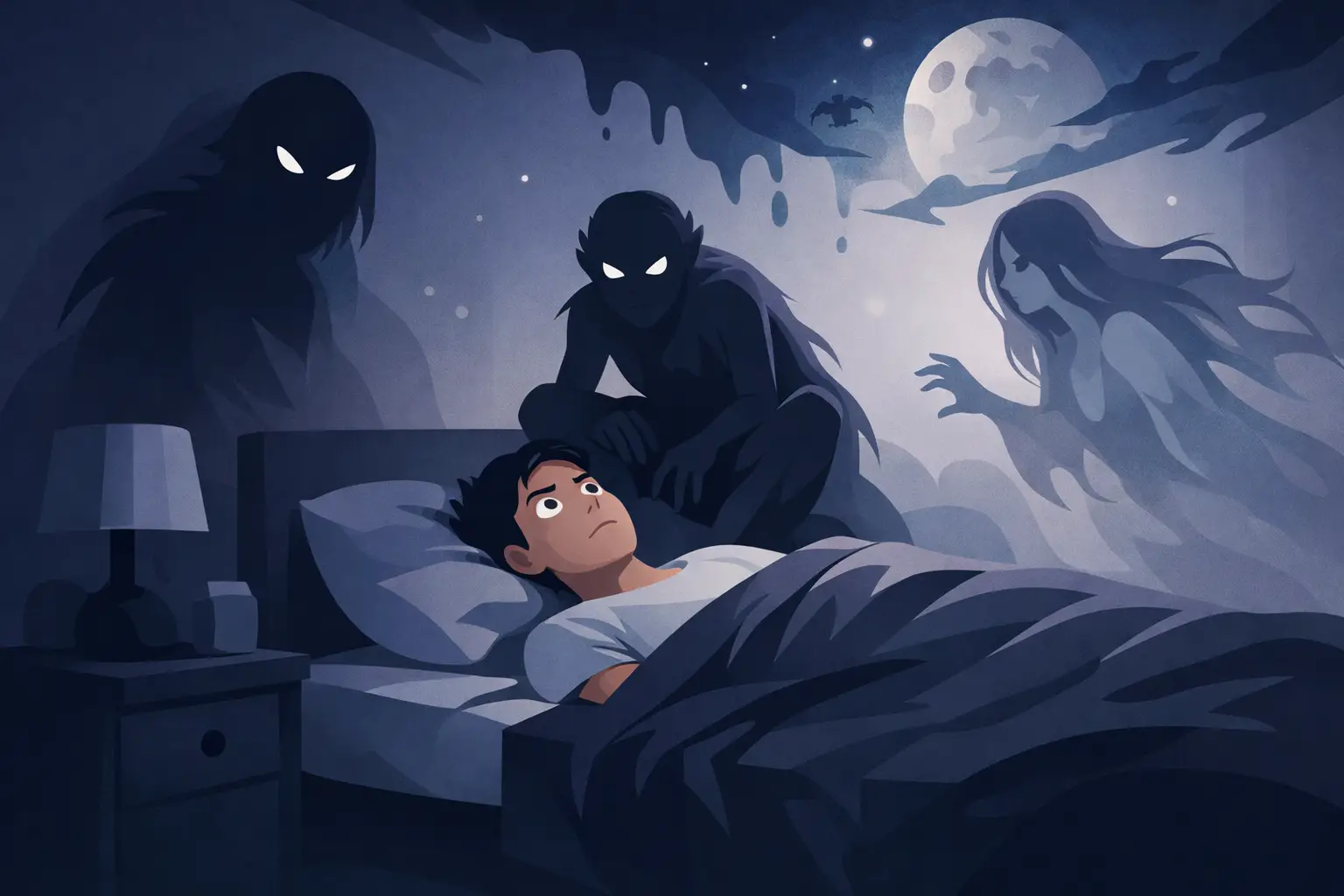
If you have ever woken up unable to move and felt sure something was in the room, you are not imagining the fear. This guide to sleep paralysis hallucinations is here to make the experience less mysterious, less isolating, and a little easier to manage.
Sleep paralysis can feel intensely real because part of your brain is awake while another part is still in a REM sleep state. During REM sleep, your body naturally stays temporarily immobilized so you do not act out dreams. If awareness returns before that paralysis fully lifts, you may be conscious but unable to move, speak, or fully orient yourself. For some people, that moment also comes with hallucinations.
That word can sound alarming, so it helps to define it clearly. In sleep paralysis, hallucinations are sensory experiences that happen at the edge of sleep and wakefulness. They can involve sight, sound, touch, pressure, or a strong sense that someone is nearby. They are not a sign that you are “losing touch” with reality. They are a known feature of a sleep-state mismatch, and they are more common than many people realize.
What sleep paralysis hallucinations can feel like
Many people describe three general patterns. One is the sense of an intruder – seeing a shadowy figure, hearing footsteps, or feeling that someone is in the room. Another is chest pressure or trouble breathing, sometimes paired with panic. A third is a floating, falling, or out-of-body sensation.
Not everyone experiences all of these, and the details vary a lot. Some people hear buzzing, whispering, or a door opening. Others feel a hand on their arm, pressure on their chest, or movement near the bed. The content often reflects fear because your brain is trying to make sense of a vulnerable moment while your stress response is already activated.
That is part of why the experience can feel supernatural or deeply personal. The brain does not like unexplained danger signals. When you are half-awake, immobile, and disoriented, it may quickly build a story around those sensations. That story can feel absolutely convincing in the moment.
A guide to sleep paralysis hallucinations and why they happen
The clearest explanation is that sleep paralysis sits in the overlap between dreaming and waking. REM sleep is the stage where vivid dreaming is most likely. It also includes muscle atonia, which is the temporary loss of voluntary muscle movement. Usually, your awareness and your muscle control return together. In sleep paralysis, they do not.
When that mismatch happens, dream imagery and waking awareness can bleed into each other. You may still be processing dream-like sensations while also noticing your actual bedroom. The result is a mixed state that feels more real than a dream and more frightening than normal waking confusion.
Breathing can make this feel worse. During REM sleep, breathing patterns shift, and if you wake into paralysis, your chest may feel heavy or restricted. Even when your breathing is still functioning normally, that sensation can trigger panic. Panic then sharpens the hallucination, increases the feeling of threat, and makes the episode seem longer.
This is one reason fear and physiology can feed each other. The episode begins with a sleep-state glitch, then your nervous system reacts to the loss of control, and the brain fills in the blanks with vivid, threatening interpretations.
Common triggers and patterns
Sleep paralysis can happen without a clear cause, but certain patterns show up often. Irregular sleep schedules are a big one. Sleeping too little, staying up much later than usual, or swinging between weekday exhaustion and weekend catch-up sleep can all make REM timing less predictable.
Stress is another common factor. Emotional overload does not directly create hallucinations, but it can make sleep more fragmented and keep your nervous system on higher alert. That combination can raise the odds of waking during the wrong moment of REM sleep.
Some people notice episodes happen more often when they sleep on their back. Others see a pattern with jet lag, all-nighters, anxiety, or sleep deprivation during exam periods, parenting, shift work, or burnout. It depends on the person. The goal is not to find a single perfect explanation. It is to notice repeat patterns that help the experience feel less random.
If episodes happen often, tracking can help. Logging when they occur, how long they seem to last, what you were feeling beforehand, and what your sleep looked like the night before can reveal useful clues. Over time, patterns are often more visible than they feel in the moment.
What to do during an episode
The hardest part of sleep paralysis is that it feels urgent. Your body wants to fight the experience right away. But intense struggle usually increases panic, which can make the hallucination feel stronger.
If you can, start with one reminder: this is sleep paralysis, and it will pass. You do not need to believe that calmly for it to help. Even repeating the phrase internally can interrupt the spiral.
Then bring your attention to the smallest thing you may be able to control. Some people can move a fingertip, a toe, or their tongue before larger muscles respond. Others find it easier to focus on slow exhaling rather than trying to take a big breath. The goal is not to force the episode to end instantly. The goal is to reduce alarm while your body catches up.
It can also help to avoid trying to interpret what you see or sense. In the middle of an episode, the brain is not a reliable storyteller. If there is a figure, a sound, or a strong presence, try labeling it as part of the episode rather than engaging with it. That mental shift can soften the fear, even if the sensations do not disappear right away.
What to do after an episode
Afterward, many people feel shaken, embarrassed, or reluctant to go back to sleep. That reaction makes sense. Your body has just gone through a surge of fear. Give yourself a minute before deciding what the experience means.
Try orienting yourself with simple facts. Name where you are. Turn on a light if that helps. Take a sip of water. Notice a few ordinary objects in the room. This can help your nervous system settle and remind your brain that the threat has passed.
Then, if you are up for it, jot down what happened. Include the time, what you sensed, your sleep position, and any stressors from the day. You do not need a perfect journal entry. A few notes are enough. This kind of reflection can turn a frightening event into usable information.
For some people, the emotional aftermath is the biggest part. That is where support matters. A calm, private space to learn, track, and recognize patterns can reduce the sense that each episode is coming out of nowhere. That is part of the reason platforms like Unfreeze exist.
When sleep paralysis deserves extra attention
Occasional sleep paralysis can happen in otherwise healthy people, especially during stressful or sleep-deprived periods. But frequency matters, and context matters too. If episodes are happening often, causing major distress, or disrupting your willingness to sleep, it is worth paying closer attention.
You may also want to speak with a healthcare professional if you have other symptoms such as extreme daytime sleepiness, sudden muscle weakness triggered by emotions, frequent vivid dream intrusions outside of sleep paralysis, or signs of another sleep disorder. Sleep paralysis itself is not usually dangerous, but sometimes it appears alongside broader sleep issues that deserve evaluation.
The key is not to panic, but not to dismiss your experience either. There is a difference between normal reassurance and feeling stuck with something that keeps affecting your rest.
How to reduce the chances of future episodes
The most helpful approach is usually consistency, not perfection. A steadier sleep schedule gives your brain fewer chances to get caught between REM sleep and waking. Going to bed and waking up at roughly the same time, especially after a run of poor sleep, can make a real difference.
Stress regulation matters too, though not in a simplistic way. You do not need to become perfectly calm to stop sleep paralysis. But lowering baseline stress can reduce fragmented sleep and help your body settle more fully at night. Short wind-down routines, less doom-scrolling before bed, and giving yourself more transition time at night can help.
If you notice episodes cluster when you sleep on your back, experimenting with side sleeping may be worth trying. It is not a guaranteed fix, but for some people it changes the pattern enough to matter.
Most of all, try to separate prevention from self-blame. Episodes are not proof that you did something wrong. They are a sign that your sleep system got crossed for a moment. Understanding that can take some of the shame out of the experience.
If sleep paralysis hallucinations have been frightening you, you are not overreacting, and you are not alone. The more clearly you understand what is happening, the easier it becomes to meet the next episode with a little less fear and a little more steadiness.